
Products

 Products Overview
Newsela products are purpose-built to unlock student motivation, inspire teachers, and drive long-lasting learning outcomes.









Resources
About
Products OverviewNewsela products are purpose-built to unlock student motivation, inspire teachers, and drive long-lasting learning outcomes.

Jewish American Heritage Month became a federally recognized holiday in 2006. While you might want to incorporate lessons, reading, or activities to recognize it in your classroom, adding a specialized holiday lesson can feel like one more thing to plan.
You don’t have to start from scratch. We have some simple content and lessons to help you bring Jewish American history, culture, and contributions to your lessons using ready-made resources.
Jump to:
Key takeaways:
Teaching Jewish American culture and history in social studies doesn’t mean you need to create a brand-new unit. You can fold in these topics into lessons you’re already teaching.
Start with background knowledge about Jewish American identity, traditions, and religion. Then move on to topics such as immigration, community life, and major historical events. This sequence helps students build understanding rather than picking up disconnected facts.
Students need a clear starting point for diving into lessons on culture. Topics like religion, traditions, and shared history will come up, and it’s important for students to have a foundation to understand them so they understand how everything is connected.
To build that understanding, use resources like:

It’s easier to make connections about why culture and tradition matter when students learn about the real people behind the content. Resources on Jewish American trailblazers show how individuals shaped fields such as law, sports, and entertainment.
Use stories from real, famous figures to anchor bigger ideas around contribution and impact. Some of the people students may be excited to meet are:
Unless students are part of them, they may not see or know how communities form. Jewish American communities, specifically, grew through immigration, shared traditions, and support networks.
Help students connect topics like movement, settlement, and culture with resources like:
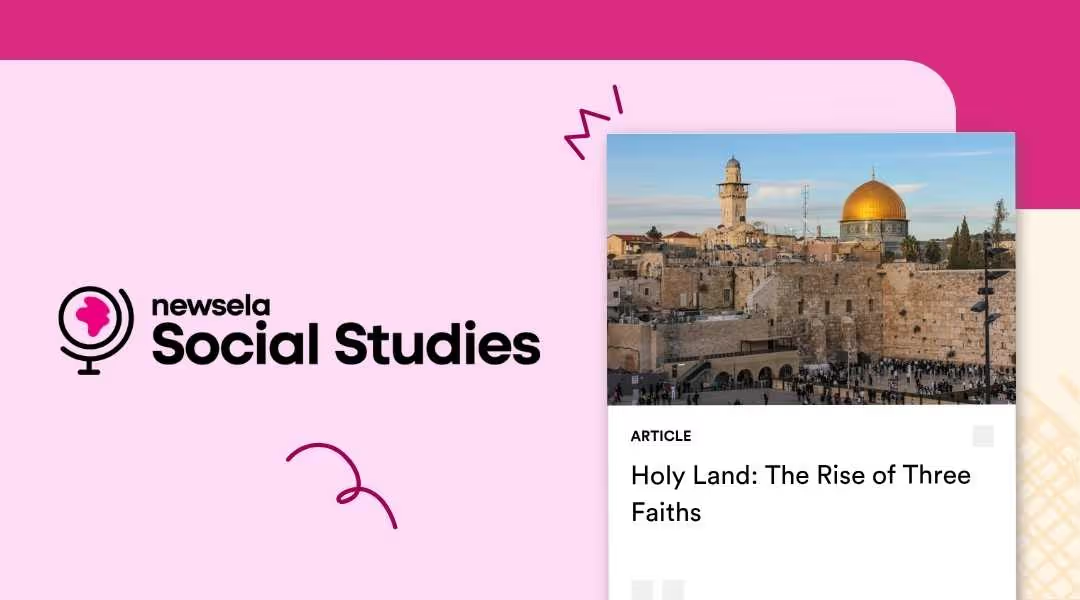
Students need a basic understanding of Judaism to make sense of Jewish American culture and history. Without that context, traditions, holidays, and historical references may feel confusing or disconnected.
To build that understanding, share resources like:
Newsela Knack: Interested in more religious studies? Check out our Comparative Religions social studies elective course that explores Judaism, Christianity, Islam, Dharmic religions, East Asian and Indigenous religions, and contemporary religious issues.
Students need both facts and context when learning about the Holocaust. Teaching this world history event means helping students understand how it happened, what people experienced, and why it still matters today. Starting a lesson before the Holocaust began can help provide a timeline and sequence to see the full picture, not just the tragedy.
To do this, you can use articles on topics like:
Teaching the history of antisemitism in social studies may feel challenging or uncomfortable. However, if you want to include this topic in your Jewish American History Month lessons, you can focus on historical context, patterns of thought, and how language can impact communities.
Keep the focus on awareness and grounded in facts and real-world experiences. This gives students the space to learn, reflect, and build respectful discussion skills. Try the following lesson sequence:
Key takeaways:
Teaching Jewish American stories and voices in ELA gives students another way to approach the content. Instead of starting with history, you start with people, voice, and lived experiences.
Focus on authors, texts, and meaning. Help students connect what they read to identity, culture, and real-world context so learning sticks.

Students may be more likely to engage with stories when they know who’s behind the text. Jewish American authors bring their personal experience, cultural context, and unique perspectives into their writing.
Highlight both the author and their work with resources like:
Share books by these and other Jewish American authors with your students this May! Check out our blog about Jewish American Heritage Month books and novels for independent reading suggestions.
Key takeaways:
Teaching Jewish contributions in STEM helps students see that science and innovation are shaped by real people and real stories. It also gives you a natural way to connect science with history and identity. Focus on scientists, discoveries, and impact for the most meaningful lessons.

Students may know about certain scientific discoveries, but not the people behind them. Highlighting Jewish scientists helps students connect the ideas to real people and their real impact. To build understanding, use resources like:
We hope these resources make it easier for you to develop relevant, engaging lessons about Jewish American history, influence, and achievements in your class. But Newsela’s products have even more great content, interactive activities, and assessment tools that you can use all year long.
If you’re not a Newsela customer yet, create an account and start your 45-day free trial of our premium content to access everything you need to teach about nearly any historical, current event, or student interest topic in your classroom.


Discover Jewish American Heritage Month books for your classroom, plus Newsela resources to build background knowledge and student understanding.

Find ready-to-use Passover activities for ELA and social studies that build background knowledge and support meaningful classroom discussion.
.avif)
Help students explore and understand the Jewish end-of-year holiday using engaging ELA, social studies, and science Hanukkah activities.


.jpg)
.jpg)