
Products

 Products Overview
Newsela products are purpose-built to unlock student motivation, inspire teachers, and drive long-lasting learning outcomes.









Resources
About
Products OverviewNewsela products are purpose-built to unlock student motivation, inspire teachers, and drive long-lasting learning outcomes.

Passover is a major Jewish holiday rooted in the story of the Israelites’ escape from Egypt. Many students may have heard of the seder meal, but may not understand the history and traditions behind it and the holiday.
If you’re planning spring lessons, these Passover activities help you build background knowledge in ELA and social studies without adding extra prep to your week.
Jump to:
Key takeaways:
Storytelling sits at the center of Passover. The holiday retells a story each year through readings, questions, and rituals. That makes it a natural fit for ELA.
You can use Passover activities to teach theme, structure, character motivation, and point of view without adding unrelated content to your pacing guide.

Passover centers on retelling a shared story. That tradition shows students how stories carry meaning across generations. To help students explore how storytelling shapes understanding and identity, use resources like:
These resources help you teach analysis while students examine how stories function beyond the page.
You don’t need a complicated lesson to teach story structure. Treat the Passover story like any other narrative text. Have students read or review the story, then guide them with questions such as:
To reinforce understanding, ask students to create a short comic that highlights the most important moments in the Passover story. This keeps the focus on narrative structure and summary skills.
Key takeaways:
Students may know that Passover involves a special meal, but they may not know the history, symbols, and traditions associated with it.
In social studies, you have a simple goal: Build context and clarify terms. Give students a framework they can use when they encounter information about Passover outside the classroom.
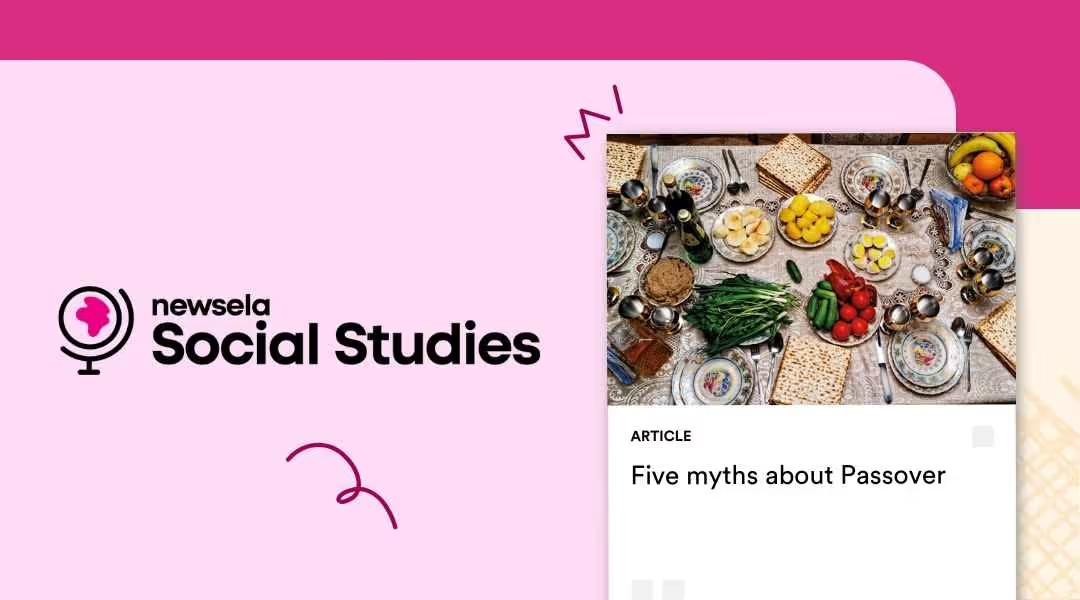
Students need three things to understand the most common Passover traditions: What the holiday commemorates, what happens at a seder, and why certain foods matter.
If students understand those basics, they can participate in discussions without guessing or being swayed by stereotypes or misinformation. To build this foundation, use resources that:
Comparison helps students organize information. It also prevents confusion about traditions from holidays that happen around the same time. To support that comparison, you can use the following lesson:
Newsela Knack: Interested in more religious studies? Check out our Comparative Religions social studies elective course that explores Judaism, Christianity, Islam, Dharmic religions, East Asian and Indigenous religions, and contemporary religious issues.
You don’t need to overhaul your plans to teach about Passover. A few strong texts, clear background knowledge, and structured discussions are enough.
With the right Passover activities, you can build literacy skills and cultural understanding at the same time, without adding hours to your prep work.
Newsela gives you ready-to-use articles, primary sources, and writing activities across ELA and social studies. You can adjust reading levels, assign quickly, and keep everything in one place.
Not a Newsela customer yet? Create your account for free and start your 45-day trial. You’ll get access to premium content and activities to support all your spring lessons.


Teach students about Purim with engaging classroom activities that build literacy, cultural understanding, & historical knowledge using Newsela resources.
.avif)
Use these Rosh Hashanah activities to teach students about the Jewish New Year through ELA and social studies lessons.
Find Yom Kippur activities for ELA and social studies that help students build background knowledge and explore Jewish culture.


.jpg)
.jpg)