
Products

 Products Overview
Newsela products are purpose-built to unlock student motivation, inspire teachers, and drive long-lasting learning outcomes.









Resources
About
Products OverviewNewsela products are purpose-built to unlock student motivation, inspire teachers, and drive long-lasting learning outcomes.

Our students tend to interact with media much differently than we did at their age.
They don’t just read articles anymore. Social media isn’t just a place to post 400 pictures after everyone went sled riding at the park on a snow day. Instead, they scroll through feeds for hours, remix existing content to make it their own, and prompt AI rather than Google—or before they think up an answer themselves.
Now more than ever, teaching media literacy isn’t just a “nice to have” unit. It’s a daily skill your students need right now.
The question isn’t whether you should teach it, but how to teach media literacy well across digital media, social platforms, and AI—without adding hours of extra work to your already full plate.
Jump to:
Key takeaways:
Back in the day, media literacy used to mean analyzing newspaper articles and TV commercials. That still matters, but it’s not enough anymore.
Today, media literacy includes social feeds, sponsored content, influencer posts, YouTube videos, group chats, and AI-generated responses. If students consume it, remix it, or share it, the content falls under media literacy.
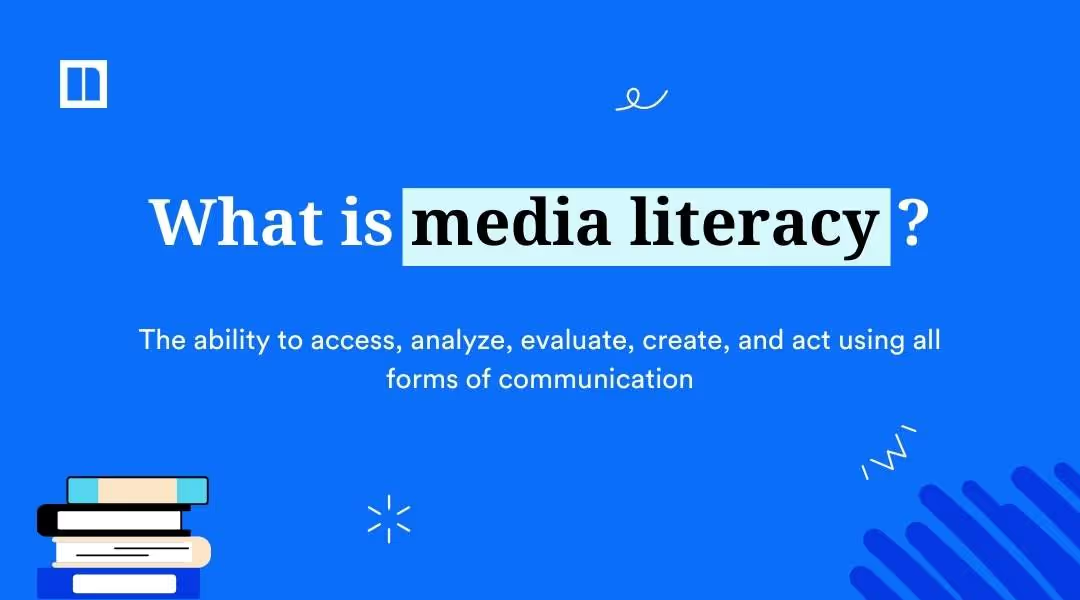
According to the National Association for Media Literacy Education (NAMLE), media literacy is the ability to access, analyze, evaluate, create, and act using all forms of communication. This definition still holds up, but it’s also evolved.
Media literacy used to focus on teaching students how to interact with and interpret newspapers, commercials, and television content. Now it includes everything a student can access on their school and personal devices, from AI responses to sponsored social posts.
Research from the Stanford History Education Group’s Civic Online Reasoning studies show that students may zero in on the content they consume but ignore source credibility. That gap is where media literacy lives—and why it matters.
In your classroom, teaching media literacy can look like:

To build understanding, use resources that let students practice with real, credible texts. Newsela offers resources like:
With these resources, students won’t just be talking about what media literacy is, they’ll be doing it.
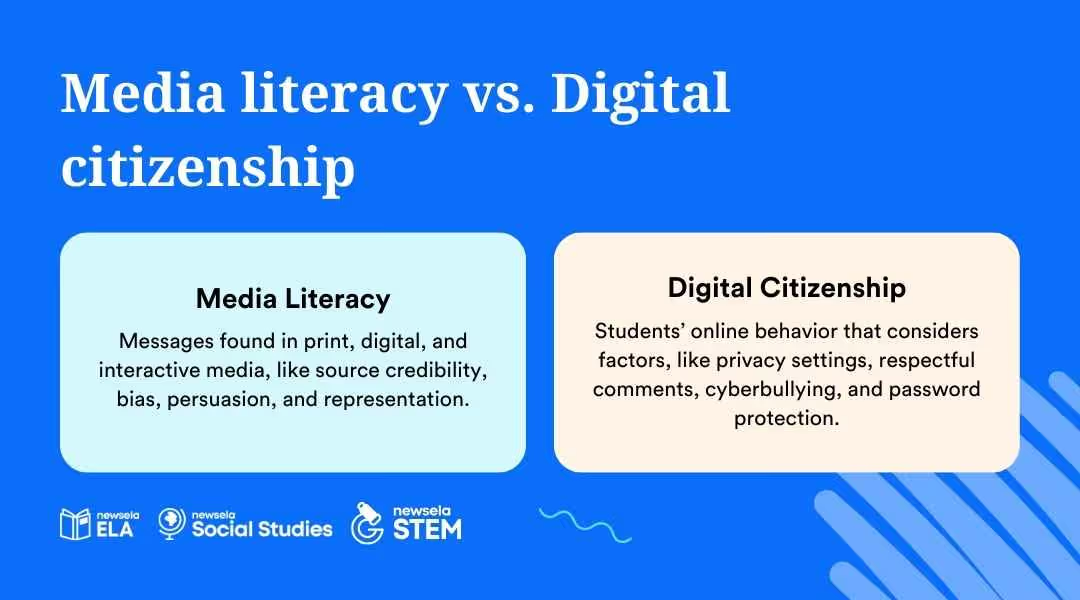
Digital citizenship focuses on students’ online behavior. Think about privacy settings, respectful comments, cyberbullying, and password protection.
Media literacy focuses on messages. Think about source credibility, bias, persuasion, and representation.
Both concepts matter, but they aren’t the same skill set. Here are practical ways you can distinguish between the two in your classroom:
If you only teach the behavior piece, students may act appropriately online but could still spread misinformation. If you only teach analysis without responsibility, students may understand the nuances of media, but ignore its impact.
To help students connect the two without confusing them, we have resources to help:
Media literacy doesn’t belong to one teacher or in one subject or department. It cuts across the curriculum.
Groups like NAMLE and Media Literacy Now emphasize that media literacy works best when it’s integrated across disciplines, not isolated to a single class. In real classrooms, this might look like:
When students hear the same evaluation language in multiple classes, it’s more likely to stick.
Key takeaways:
Digital media literacy. Social media literacy. AI literacy. They all overlap and fall under the umbrella of media literacy, but they aren’t identical. If we blur them together, instruction can get fuzzy.
Breaking down what each one actually looks like in your classroom can help guide instruction and make lessons clearer for your students.
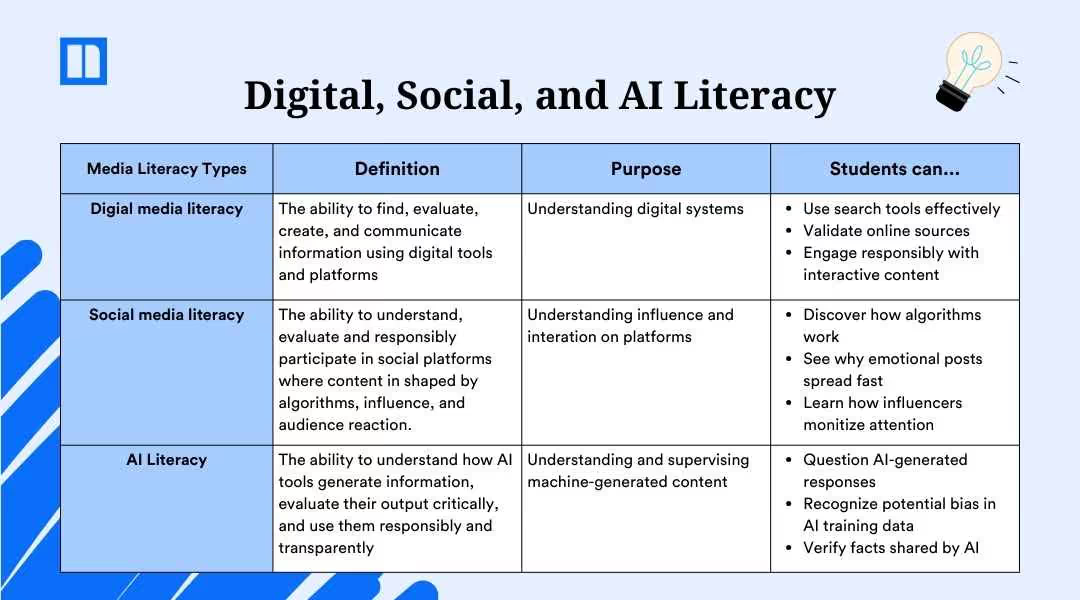
Digital media literacy goes beyond just analyzing messages. It focuses on how students access, use, understand, and engage with digital tools and platforms. In the classroom, teaching digital media literacy can look like helping students:
Research from the Digital Inquiry Group shows students often struggle to evaluate online sources, even when they feel confident navigating the web. To help close that gap, use resources that combine digital access with evaluation. These types of lessons can help students move from “I found this online” to “I can evaluate it, too.”
Social media literacy zooms in on one aspect of digital media literacy: How platforms shape perception.
On social platforms, students don’t just read information and move on. The feed is designed to keep them scrolling and taking in more and more input.
Findings from the Pew Research Center show that teens often get their news from social media platforms more than from traditional outlets. At the same time, studies from MIT have found that false information may spread faster than true stories online.
Together, these two studies don’t just highlight a content issue on social media, but a design issue. These platforms aren’t designed to help us navigate the perspectives and intent of the content. They’re just meant to keep us online, no matter what.
Social media literacy can help students better understand:
When students begin to realize their feeds are curated, not neutral, they may be more likely to question what they see. To build that understanding, you can use Newsela’s elementary, middle, and high school social media text sets, part of the SEL add-on collection.
AI literacy is about helping students understand what AI is doing when it generates an answer. Generative AI tools predict patterns based on massive datasets. They don’t “know” information. Their intelligence isn’t the same as a human’s.
UNESCO’s guidance on AI and education stresses that students need to understand both the potential and limits of AI systems to use them effectively. That includes bias, accuracy, and ethical use.
In your classroom, AI literacy looks like teaching students to:
Teaching AI literacy also looks like setting clear expectations. When students use AI for brainstorming, drafting, or research support, they should be able to explain what they accepted, what they rejected, and why.
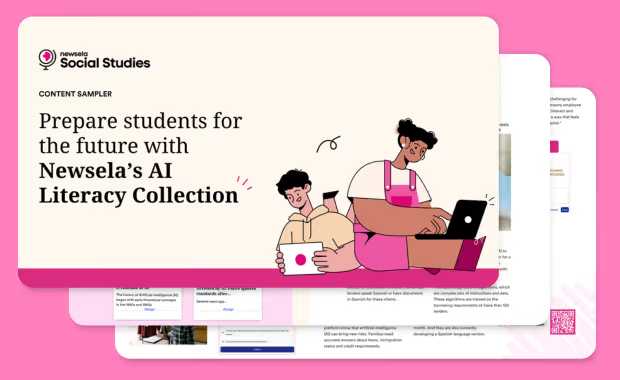
To build that understanding, you can use the AI Literacy Collection available in Newsela Social Studies. Every unit provides a range of articles, each available at five reading levels. Represent different research and opinions, and grab detailed lesson guides for easier planning. This collection aligns with Digital Promise and other recognized AI Literacy frameworks.
Check it out: Explore our AI Literacy Collection article sampler
Key takeaways:
Media literacy isn’t just a middle or high school course. As technology and skills evolve and platforms change, students of all age levels (and even adults!) need to be trained and retrained in these areas.
What stays constant, however, is the need for students to pause and think before they trust, share, or create content.
Elementary media literacy focuses on foundational analysis skills like:
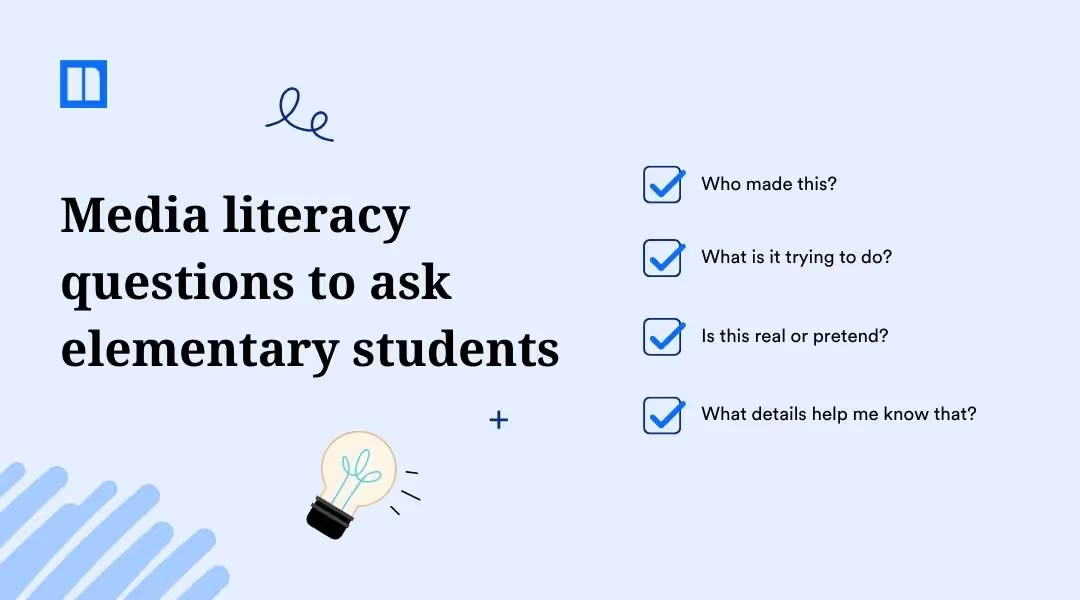
Organizations like Common Sense Education emphasize that starting with these simple evaluation questions helps students identify purpose long before they can analyze bias. In your K-5 classrooms, this might look like:
Social media literacy becomes increasingly important in middle school. That’s when students start forming their online identities. They care about visibility, want to experiment with new media, and they want to test boundaries.
This is also the time when they start to consume news through social feeds rather than through family members, teachers, or traditional media sources.
Data from the Pew Research Center consistently shows that teens rely heavily on platforms like YouTube, TikTok, and Instagram for information. That means the algorithm has to become part of the learning environment.
Middle school is the moment to teach students:

This is where media literacy and digital citizenship start to overlap in real ways. Instead of just analyzing content, students need to reflect on participation. They need to consider how social media use affects their reputations, sense of belonging, sense of humor, and digital footprints.
By high school, many students aren’t just consuming media. They’re also creating it. Even if they’re just posting to friends and family, they’re still sharing media, influencing peers, and making content decisions. And many of them may use AI tools to generate images, write captions, or even help them with schoolwork.
At this grade level, media literacy becomes about judgment and responsibility. Students should be able to:

Yet the Digital Inquiry Group has shown that high school students struggle to evaluate credibility when faced with polished digital content. That’s why verification exercises can’t stop in middle school.
This is also where AI literacy shifts. It’s no longer just teaching that AI can be biased. You also have to get students to consider questions like:
In the classroom, this might look like doing activities such as:
At this stage, media literacy isn’t just about spotting misinformation. It’s about preparing students to participate in a world where information is abundant and automation is normal.
Key takeaways:
If you don’t intentionally teach media literacy because you don’t have time, you’re not alone. You may justify it by telling yourself that your students are tech-savvy, and they know how to navigate media.
The truth is, they don’t.
Research from the Digital Inquiry Group continues to show that students struggle to evaluate online sources, even when they feel confident doing it.
And this is just one of many challenges that can crop up when you’re teaching (or not teaching) media literacy in your classroom. But for every problem, there’s a solution, as long as you’re willing to work at it.
Your plate is already full. Meeting standards. Doing test prep. Answering parent emails. Going to faculty meetings. You’re booked solid.
When admin says, “You have to focus on media literacy,” it might sound like one more unit to squeeze in and check off that box. But to do it right, media literacy isn’t just another block to shove in your pacing guide. It comes from reshaping things you already teach.
Here are some tips you can try to make media literacy part of your everyday classroom routines:
Your students are comfortable online. In fact, they probably spend more time on a screen than doing anything else. They know the trends and the shortcuts, and that confidence can feel like competence.
But as we’ve already discovered, the research shows a different story. Students can’t tell the difference between credible and unreliable sources. They’re more likely to trust things that feel familiar, either in content or design, rather than checking for authorship or evidence.
Just because students scroll frequently, it doesn’t mean they read critically. This is the gap between confidence and competence, and your lessons can fill it. Try:

Students are referencing where they actually get information. The challenge isn’t the platform, but the evaluation. When a student marks the source as TikTok, that’s likely where they first saw the information, but not where it originated. Instead of shutting it down, try asking:
Sometimes an influencer cites solid research, and other times they repeat misinformation. That discovery is the lesson. When students learn that social media is a starting point, not an endpoint, they begin to shift from consumption to investigation.
AI changes the starting point for a lot of student work. They head to ChatGPT for research. They use Claude and Gemini to avoid starting a writing assignment with a blank page.
This shifts the skills that you have to teach.
You’re not focused solely on spotting misinformation online. You’re trying to get students to recognize that AI-generated responses might sound correct, but lack accuracy or proper sources.
Here are some ways you can build that muscle for them:
Picture this: You ask a student to evaluate a claim and push for evidence. They respond with something similar to, “That’s just your opinion.” It feels dismissive or even confrontational. But actually, it signals confusion about the difference between opinion, perspective, and evidence.
This can turn media literacy into a language lesson. You can ask:
When students say “that’s just your opinion,” they’re often reacting to having to think deeper or more critically. This can be difficult, or even uncomfortable, for them until it becomes second nature. It’s your job to move the conversation from reaction to reasoning. The shift won’t happen in one discussion, but will evolve naturally when evidence becomes the expectation.
If parents express concern about explicit media literacy being taught in the classroom, you can emphasize the importance of building skills rather than focusing on the content. Media literacy isn’t about telling students what to think. It’s about teaching them how to evaluate information.
Explain that media literacy focuses on:
Those are academic skills that show up in state standards and support reading comprehension, research, and writing.
You can also clarify what media literacy isn’t. It’s not:
When you keep the focus on the process, you can keep the conversation lighter.
Key takeaways:
Teachers can build strong media literacy habits in their classrooms. But it sticks most when students hear the same language and practice the same skills across all subjects.
This type of consistency doesn’t happen by accident. It requires shared language and expectations, as well as admin coordination.
Whether you’re a teacher looking to level up to admin someday, an admin who wants to support media literacy efforts at your district, or any educator who wants more information on how to make the system work, this section is for you.
Students notice patterns. If they analyze credibility in ELA but never question sources in science, the skill feels optional. If one teacher requires AI disclosure but another ignores it, expectations feel negotiable.
Consistency builds habit, and it starts at the school and district level.
In practical terms, creating consistency across your organization can look like:
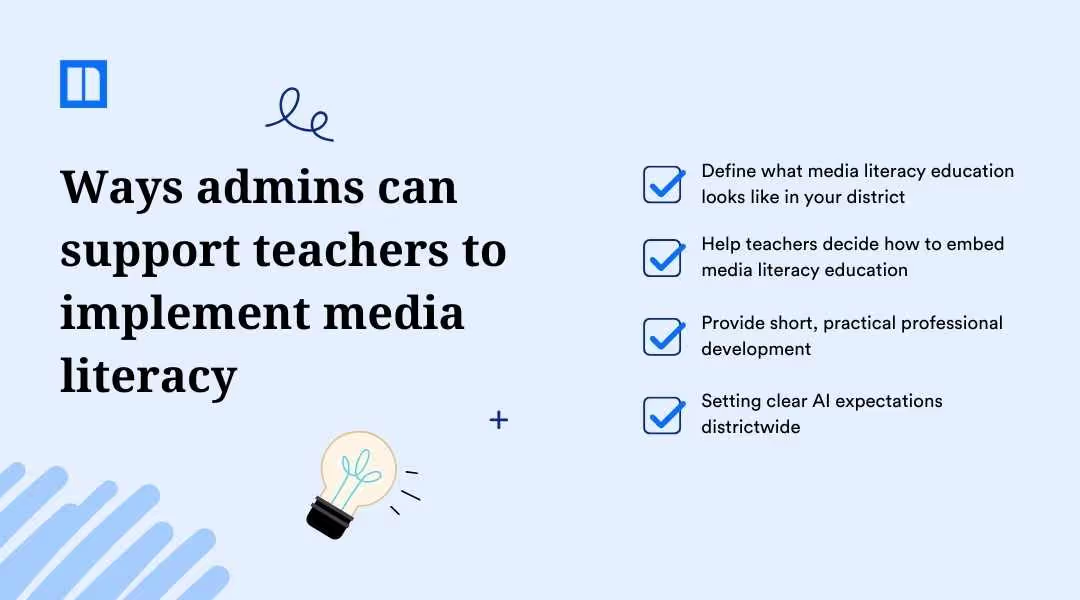
Teachers don’t need another shiny initiative with a new acronym. They just need clarity. Admin leaders can support consistent media literacy efforts by:
Key takeaways:
Media literacy isn’t built in a week. But it does form over time in the quick pauses before sharing and the expectation that reasoning matters. When media literacy becomes part of how your class operates, it stops feeling like an extra topic and becomes normal learning.
Normalizing the right routines can make media literacy a habit. If questioning sources only happens during one lesson, students treat is an assignment. If it happens all year, they know it’s an expectation.
Your classroom culture shifts when students expect to explain their reasoning, know that evidence matters more than volume, and see changing their minds based on facts as growth.
You can do this by modeling it first. When you publicly pause to investigate, students learn that slowing down is normal. They’ll start to ask each other for sources, challenge claims respectfully, cite evidence without prompting, and question AI outputs without your nudging.
Learning media literacy isn’t about getting an “A” or a checkmark on the report card. It’s about determining whether they can back up what they say. Instead of grading the position a student takes, assess things like the:

Two students can have two different analyses of a piece of media, and both earn strong grades if their reasoning is sound. Make it explicit. Tell students, “I’m not grading you on what you believe. I’m grading you on how well you support it.”
Rubrics can help. When students understand that the grade is tied to justification, not stance, discussions feel safer and stronger.
Media literacy isn’t an extra unit to add to your lessons. It’s the thinking skill that strengthens reading, writing, discussion, and research across your classroom.
And you don’t have to build it alone.
With Newsela’s high-quality instruction products and add-ons, you can bring real-world, leveled texts into your lessons and give students daily practice analyzing sources, perspectives, and claims.
If you’re ready to see how it works, start a free 45-day premium trial and explore Newsela’s media literacy resources with your students.


Find Digital Citizenship Week activities for ELA, social studies, and STEM to help students practice media literacy, online safety, and AI literacy.

A practical guide for K–12 administrators on AI in schools, covering policy, equity, literacy, and responsible implementation.
At Newsela, we believe the best education solutions power great teaching, they don't replace it. Learn more about our philosophy on AI tools in education.


.jpg)
.jpg)
.avif)