
Products

 Products Overview
Newsela products are purpose-built to unlock student motivation, inspire teachers, and drive long-lasting learning outcomes.









Resources
About
Products OverviewNewsela products are purpose-built to unlock student motivation, inspire teachers, and drive long-lasting learning outcomes.

February brings the excitement of the Daytona 500 and provides a timely chance to engage students with real-world learning. These Daytona 500 activities connect science, social studies, and ELA concepts to students’ interests and support critical thinking, analysis, and hands-on learning.
Jump to:
Science is the star of racing strategy, car design, and safety. Give students hands-on and real-world STEM connections through Daytona 500 activities to keep them motivated while strengthening their knowledge of essential science concepts.
Key takeaways:
Racing involves physics, planning, and precision. Students can explore how drivers rely on calculations and consistent routines to stay efficient and safe.
After students understand the “why” behind these habits, they can explore STEM initiatives connected to NASCAR. Use this Newsela STEM activity to drive (every pun intended) the concept home:
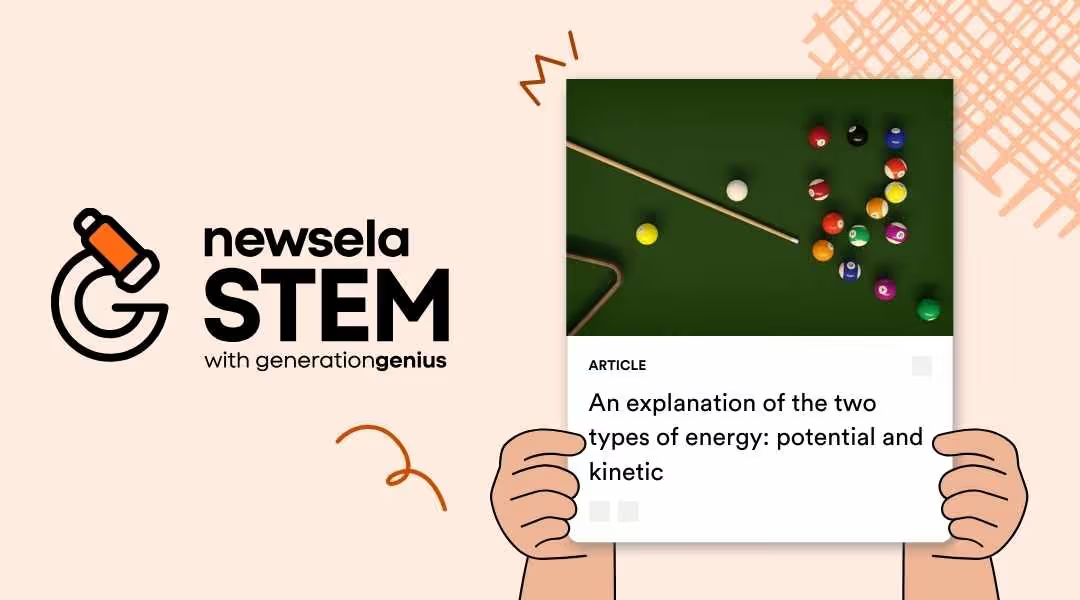
Kinetic energy is what keeps a race car moving around the track. Students can learn how motion impacts speed, safety, and collision outcomes. Try these resources to teach the topic:
Energy transfers help fuel convert into motion. Students can see the chain reactions that power every lap of the Daytona 500 by reviewing articles on topics like:
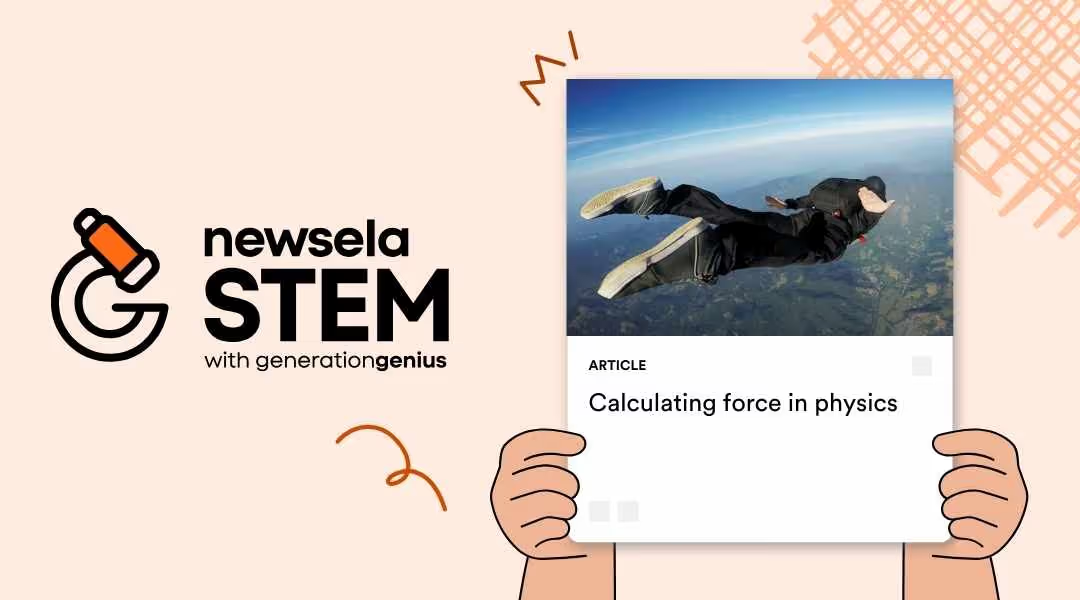
Students can learn that forces—like pushes, pulls, and interactions—can affect things like acceleration and steering ability. These grounding concepts can help them understand the science behind speed, especially with the help of Newsela STEM resources on topics like
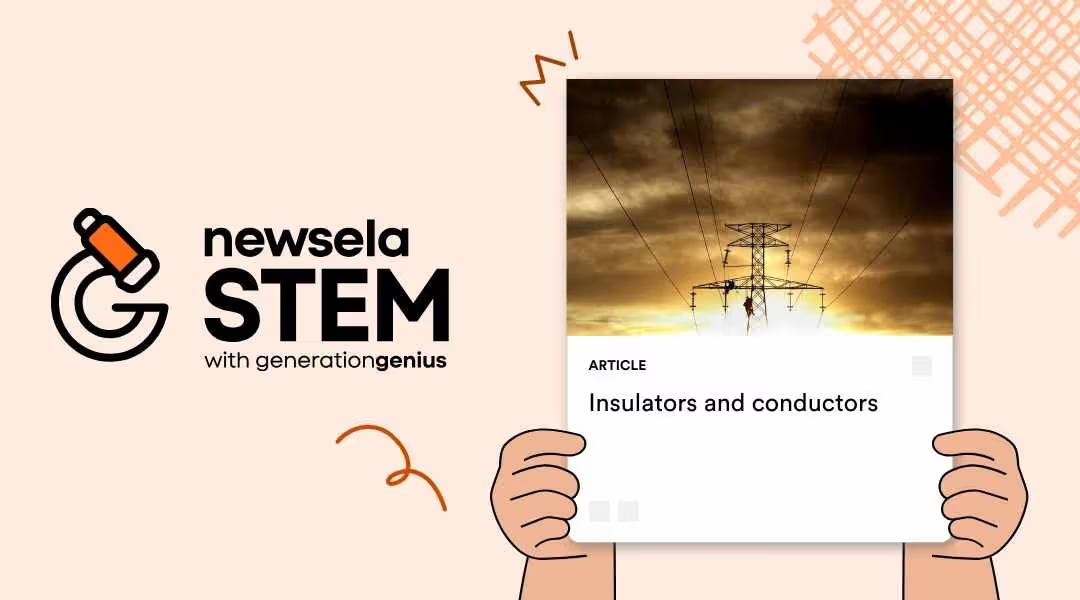
Students can break down concepts like balanced vs. unbalanced forces, magnetism, and electrical interactions. These comparisons help them understand stability and speed dynamics during the Daytona 500. To make the concepts stick, share resources on topics like:
There are many types of forces that work on a car and driver during a race. Help students better understand how these forces interact by exploring topics like:
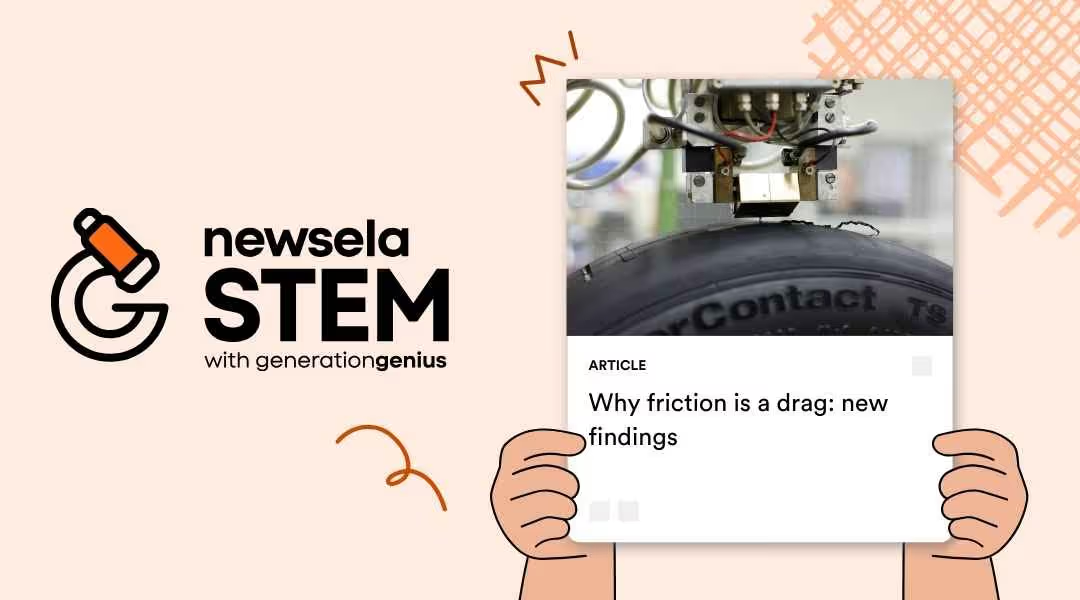
Friction plays a huge role in tire performance and control. Students can connect everyday science to high-stakes racing, like at the Daytona 500, where friction can be the difference between a win and a loss. Teach this topic with the following lesson:
Hands-on activities help students understand energy and motion through experimentation. Try these STEM activities with your students to demonstrate the properties of energy and speed:
Tire material influences grip, weather performance, and safety. Students can explore why rubber is the top choice for making tires and consider how they could change race performance in the Daytona 500. Have them examine articles on topics like:
Electric vehicle innovation is transforming transportation. Students can think critically about the future of NASCAR racing and sustainability by exploring articles on topics like:
A virtual visit to a Toyota factory gives students a behind-the-scenes look at how vehicles are built and designed. This experience can link engineering concepts to the real world and reinforce STEM learning. Try these activities during your virtual field trip:
Don’t forget to download your in-class worksheet that students can fill out during the trip to record their thoughts and observations!
Newsela STEM with Generation Genius science videos makes it easy to teach the concepts behind the Daytona 500 in a fun, engaging way. Try these selections from our library:
K-2 Science:
3-5 Science:
6-8 Science:
Students may wonder who gets to be a professional athlete and how their careers differ across sports and communities. Students can explore how the sport of car racing is evolving with these Newsela Social Studies activities.
Key takeaways:

Rajah Caruth’s story gives students a modern example of persistence, training, and breaking barriers. His experience in the Drive for Diversity Development Program shows how opportunities are expanding within the sport. Students can learn more about this topic by reading articles on topics like:
The Daytona 500 is built on innovation, making it a way to introduce ELA discussions and debates about emerging technologies, ethics, and future careers.
Key takeaways:

Students consider whether autonomous vehicles could eventually replace human drivers on the road and in motorsports. This ELA debate can open the door for critical thinking, evidence evaluation, and debate. Try it with these ELA resources:
With Newsela’s subject products, you get high-interest texts, built-in activities, and scaffolded assessments that make teaching feel like grabbing the checkered flag.
Not a Newsela customer yet? Sign up for Newsela Lite and start your free 45-day trial of our premium products!


Explore science, ELA, and social studies activities that will get your students excited about learning while tapping into their interest in the Super Bowl.

Use Stanley Cup Finals lessons to engage students in ELA and STEM with real-world sports connections and ready-to-use classroom activities.

Use basketball articles for students to teach ELA, STEM, and social studies with engaging NBA content and real-world learning.


.jpg)
.jpg)