
Products

 Products Overview
Newsela products are purpose-built to unlock student motivation, inspire teachers, and drive long-lasting learning outcomes.









Resources
About
Products OverviewNewsela products are purpose-built to unlock student motivation, inspire teachers, and drive long-lasting learning outcomes.

Asian American and Pacific Islander, or AAPI, heritage shows up in the stories, voices, and experiences of many popular authors, poets, and creators. This is a great time to bring those perspectives to the head of the class in your ELA lessons—without overhauling your existing lesson plans.
With Newsela ELA, you can plug AAPI heritage into what you already teach. Use texts, poetry, and paired lessons to build background knowledge and help students connect identity, culture, and literacy.
Key takeaways:
Poetry is an easy way to bring AAPI heritage into your ELA block, but you don’t need to change your existing lessons. Instead, swap in a text that centers on AAPI identity and experiences.
These lessons help students connect figurative language to real voices. You’ll get strong discussion, personal reflection, and meaningful analysis without adding extra prep.
%E2%80%9D%20A%20poem%20by%20Janet%20Wong.avif)
Help students explore how identity shows up in language, metaphors, and self-expression. Focus on how authors describe who they are and how they fit into their communities. To build that understanding, use the following activity:
You can also use this poem and lesson with your youngest students with a version designed especially for the elementary grade band!
Students can explore AAPI heritage by analyzing how poets describe belonging, identity, and place. This format helps them see how small details like images, word choice, and tone reveal what it feels like to grow up between cultures.
Follow this lesson to get started:
Key takeaways:
Folktales are an easy way to bring AAPI heritage into your classroom. Students already know how stories work, so you can focus on meaning instead of structure.
These texts help students see how traditions and beliefs show up in storytelling. You’ll get strong comprehension, discussion, and cultural awareness opportunities without needing heavy scaffolding.

Students can explore how folktales reflect values, traditions, and beliefs across cultures. These stories show what communities pass down, what they value, and how they explain the world. For AAPI Month, try selections like:
Key takeaways:
Students may be more engaged with content they have seen on screen. With media tie-ins, you can double down on the chance to dig in and make things they already enjoy academic.
By connecting AAPI heritage to media, you can help students question representation, identity, and perspective. It’s also a great way to bridge literature to content they already know and like.
Help students compare how stories are told across formats through multimodal learning. Focus on what feels authentic, what doesn’t, and how those choices shape how people understand culture. Use Gene Luen Yang’s graphic novel “American Born Chinese” and its Disney+ screen adaptation as model texts in the following lesson:
Key takeaways:
Students likely don’t know what the publishing process looks like before books and stories get to them. They don’t see the decisions about who gets their work shared and who’s left out. This is a chance to make parts of the process visible.
By connecting AAPI heritage to publishing, you help students understand whose stories are told and why. It also gives them a real reason to read, discuss, and write with purpose.

AAPI heritage is still underrepresented in publishing. In 2020, only 22 of the 220 authors with books on “The New York Times” fiction bestseller list were of AAPI heritage. When students see which stories get published, and which are missing, they may better understand how access, visibility, and personal bias shape what we read.
To build understanding of this topic, try the following lesson:
Key takeaways:
Family stories can make AAPI heritage feel more real for students. These texts can help them see how identity shows up in everyday moments, especially in relationships and communication. These types of texts also give you a clear way to do analysis. Students can track evidence, study author choices, and connect personal experience to larger cultural ideas.
Analyze how authors describe family relationships, language, and identity. Focus on how small moments like conversations, traditions, and expectations can reveal deeper cultural experiences. Use the works of Chinese-American author Amy Tan as a starting point for this type of lesson:
Key takeaways:
Paired texts make AAPI heritage easier to explore from more than one angle. Students can compare perspectives, themes, and ideas without needing extra background before they read. This approach also helps you cover multiple skills at once. Check off comprehension, analysis, and connection with texts that work well together.
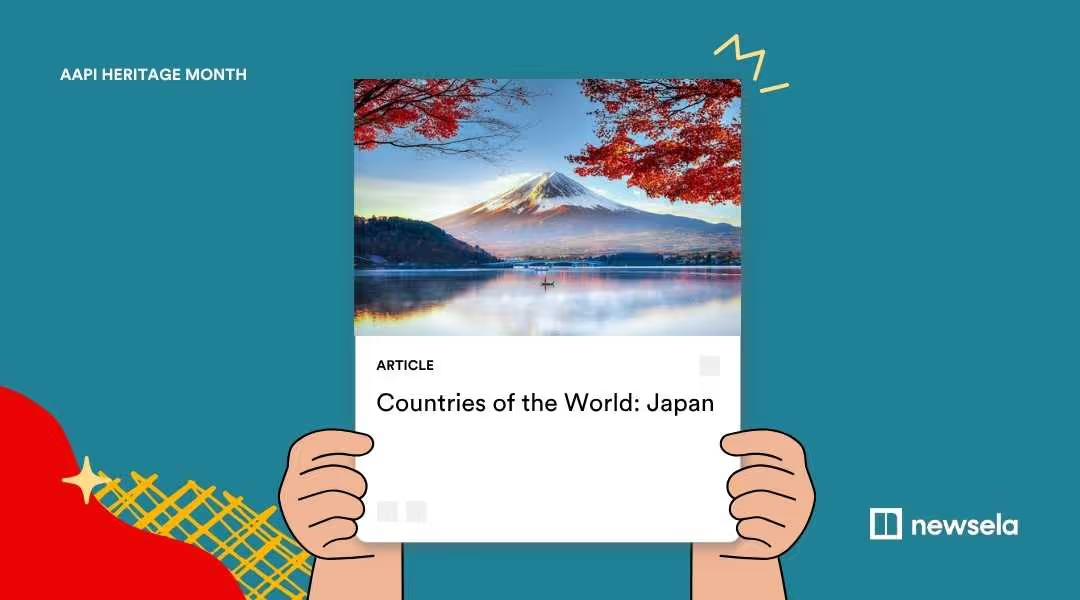
Paired texts help students understand AAPI heritage by showing the same idea from different angles. When students compare fiction and nonfiction, they see how culture, identity, and experience show up across texts.
You can use the following text pairs along with paired text analysis worksheets or Venn diagrams to help students answer comparison questions and track their observations:
AAPI heritage shouldn’t be a one-month focus. These texts and activities give you easy ways to bring identity, culture, and representation into your ELA lessons anytime.
With Newsela ELA, you can keep that momentum going. You’ll have to access to texts at multiple reading levels, built-in supports, and ready-to-use activities that help every student engage with AAPI heritage in a meaningful way.
Not a Newsela customer yet? Sign up for an account to start your 45-day free trial of all our premium product features.


Teach students what AAPI Heritage Month is and why it’s so important with curated lessons for your social studies classes.

Explore AAPI books for your classroom. Build background knowledge with ready-to-use resources that support student understanding and engagement.

Teach AAPI scientists with ready-to-use STEM lessons. Help students explore real innovators, young trailblazers, and AI pioneers.


.jpg)
.jpg)