
Products

 Products Overview
Newsela products are purpose-built to unlock student motivation, inspire teachers, and drive long-lasting learning outcomes.









Resources
About
Products OverviewNewsela products are purpose-built to unlock student motivation, inspire teachers, and drive long-lasting learning outcomes.

If you teach in a school with a large Arab American community, April matters. It’s a time when you can consciously make sure your students see their culture, family, and history reflected in the classroom.
Arab American Heritage Month activities give you chances to do that. You can honor identity, build background knowledge for everyone, and bring meaningful texts into your ELA and social studies lessons without straying from your standards.
Jump to:
Key takeaways:
Arab American Heritage Month gives you an opportunity to incorporate culture, geography, and civic recognition into your lesson plans. You can embed these activities into what you already plan on teaching: World regions, government, or cultural studies.
Students should understand why Arab American Heritage Month is federally recognized and what the recognition represents. They should also understand the cultural roots, shared traditions, and regional geography connected to Arab heritage.
To build that foundation, use resources that provide historical context and geographic clarity, like:
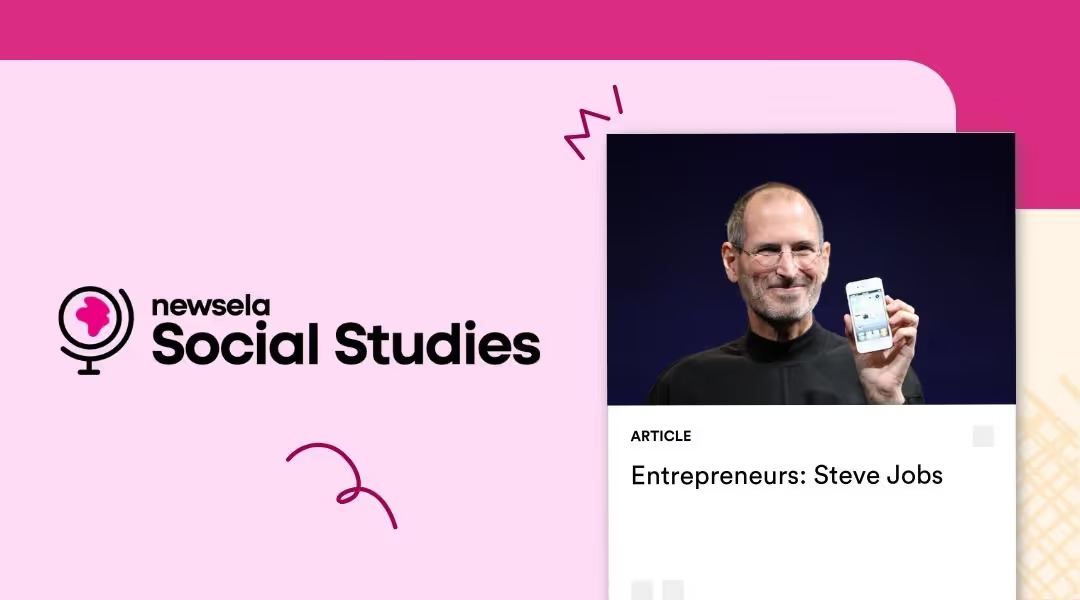
Students should see Arab Americans represented in leadership, business, sports, and government. It helps them connect heritage to real influence and achievement across fields.
To highlight impact across different areas of public life, use resources that profile well-known Arab American figures, like:
Students benefit from seeing Arab American communities as active, local, and vibrant. This helps move the conversation beyond a single heritage month and into real places, leaders, and civic impact.
To help students see how communities shape culture and public life, use resources that highlight real examples across the country, like:
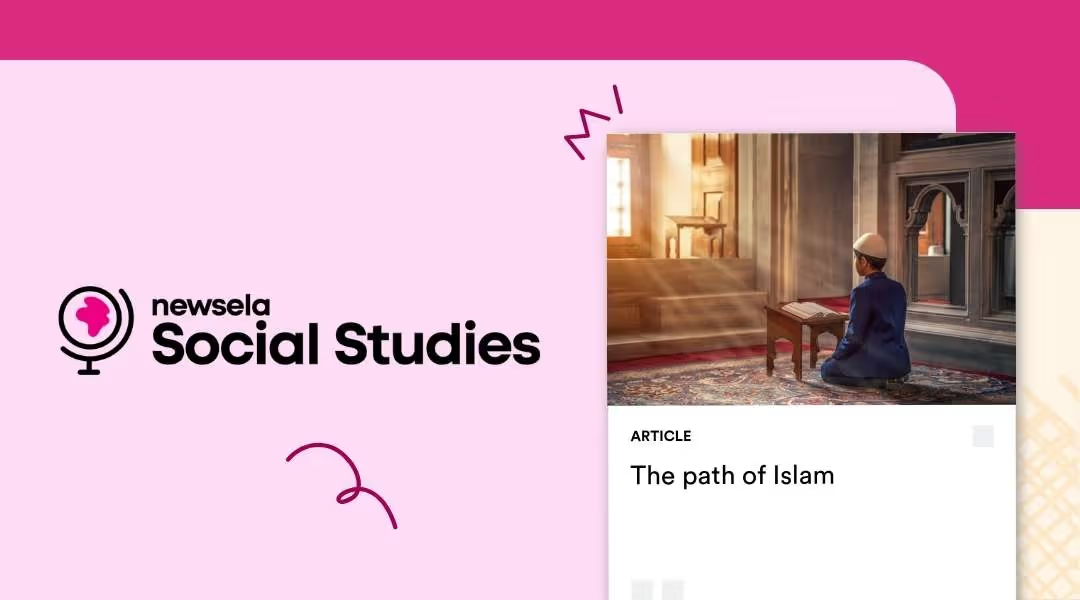
If you’re covering world history or comparative religion, students need a clear understanding of where Islam began and how it developed. This builds context for studying many Arab-majority countries and global history.
To establish that foundation, use resources that outline key events, figures, and influences, like:
Newsela Knack: Interested in more religious studies? Check out our Comparative Religions social studies elective course that explores Judaism, Christianity, Islam, Dharmic religions, East Asian and Indigenous religions, and contemporary religious issues.
Students often hear about the Southwestern Asian region without understanding the role religion, civic change, and cultural expression play in daily life. This is a chance to ground that learning in real examples.
To build that understanding, use resources that highlight civic shifts and cultural voices across the region. Explore topics like:
Many Arab American studies have family ties to countries across Africa and Southwest Asia. Even if they don’t, your class benefits from understanding that being Arab doesn’t just mean coming from one place or having one type of experience.
Use country-specific examples to show how geography, culture, and daily life differ across the Arab region.

Egypt connects Africa and Southwest Asia and plays a major role in regional culture. Students can explore how tradition and modern life intersect in different parts of the country. To help students see that range, use resources on topics like:
Saudi Arabia is home to major religious sites and has a strong role in regional economics. Students can examine how cultural norms and public life continue to evolve in the country. To build that understanding, use resources on topics like:

The UAE is known for tourism, architecture, and global investment. It offers a strong example of how tradition and modernization interact. To give students a clearer picture, use resources on topics like:
If you teach ancient history, you’re likely used to the question of “Why does this matter?” Mesopotamia lies in a region that includes present-day Arab countries such as Iraq, Syria, and Kuwait. Students can see how these early civilizations still shape law, writing, and government in the region.
To build that historical foundation, use resources that cover:
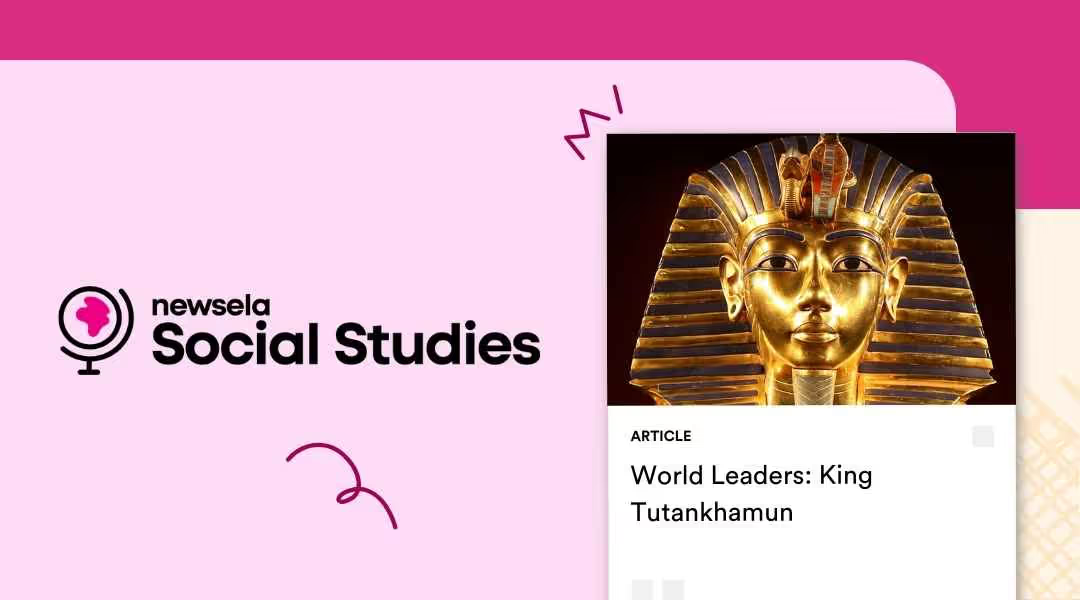
Ancient Egypt is often taught as pyramids and pharaohs. But students benefit from seeing an even bigger picture that includes geography, religion, and long-term achievements. You can deepen that learning while staying standards-aligned.
To strengthen that foundation, use resources that cover:
Key takeaways:
Arab American Heritage Month activities fit naturally into ELA. You’re already teaching theme, perspective, media analysis, and argument writing. These activities just provide additional opportunities to include more voices in the conversation.
When students see Arab American stories, creators, and public figures in their lessons, it can shift classroom culture in a meaningful way. It also gives students stronger cultural literacy.
Representation shapes how students understand identity and belonging. Looking at media from podcasts to film gives them modern touchstones to tie to Arab American experiences.
To help students examine how we share and amplify voices, use resources on topics like:
After reading, have students complete a comparing media note catcher to organize ideas and prepare for discussion or writing.

Personal stories build empathy and perspective in ways informational texts sometimes can’t. When students read about families building businesses, supporting youth, and adjusting to new communities, they gain real-world context for identity and belonging.
To tie that learning to lived experiences, use resources on topics like:
Sports stories grab students’ attention. They also open the door to bigger conversations about identity, visibility, and opportunity. You can use these texts to spark discussion and move into opinion writing or short, constructed responses.
To guide their work, use this sequence:
Independent reading time is one of the easiest places to increase representation. You don’t need to overhaul your curriculum or get the whole class on board. You can simply expand your students’ reading choices.
Share titles written by Arab American authors or centered on Arab American experiences so students see culture, identity, and belonging reflected in fiction and memoir. Try selections like:
Note: Please preview these selections to make sure they align with your grade level and district guidelines. Some include mature themes, strong emotional content, or outdated language. Consider offering choice, providing context before reading, and communicating with families if needed.
Arab American Heritage Month activities shouldn’t feel like an add-on. When you have the right texts, it’s easier to build meaningful lessons that reflect your students and strengthen your standards-based instruction.
Newsela’s products give you access to high-quality, standards-aligned content you can use during April and all year long. You get adjustable reading levels, built-in assessments, and writing tools that make planning simpler.
If you’re not using Newsela yet, now’s a great time to explore it! Sign up for your free account and start your 45-day trial to access premium content, interactive activities, and everything you need to teach topics that matter to your students.


Teach students about Nowruz cultural traditions with ELA, social studies, and STEM activities that explore history, spring celebrations, and global traditions.

Teach students about the Muslim holiday of Ramadan with ELA and social studies activities for all grade bands.

Teach Eid al-Fitr activities with ready-to-use ELA and social studies lessons that help students explore traditions, history, & diverse perspectives.


.jpg)
.jpg)