
Products

 Products Overview
Newsela products are purpose-built to unlock student motivation, inspire teachers, and drive long-lasting learning outcomes.









Resources
About
Products OverviewNewsela products are purpose-built to unlock student motivation, inspire teachers, and drive long-lasting learning outcomes.

Many cultures welcome the new year with rituals tied to nature, history, and community. Nowruz, the Iranian New Year, begins on the first day of spring and offers your students opportunities to explore cultural traditions, seasonal change, and global perspectives.
You can use Nowruz cultural traditions to build background knowledge, spark thoughtful discussion, and connect learning across ELA, social studies, and science, all while helping students better understand how people around the world celebrate the new year.
Jump to:
Key takeaways:
Nowruz offers rich texts and real-world connections that fit naturally into ELA instruction. You can use articles, writing prompts, and discussion strategies to help students build background knowledge while practicing core literacy skills.
Summarizing Nowruz content helps students focus on key ideas as they learn about cultural traditions associated with the Iranian New Year. You can guide students to identify main ideas, supporting details, and important vocabulary before sharing their understanding in writing or discussion. To implement the lesson:

Comparing traditions helps students make personal connections while practicing analytical thinking. When students examine how they celebrate spring or the new year alongside Nowruz traditions, they can deepen their understanding of similarities and differences across cultures. Use these resources to compare Nowruz to:
Key takeaways:
Nowruz has been celebrated for thousands of years, which makes it a great catalyst for teaching history and culture. You can use social studies texts to help students understand where these traditions began, how they evolved, and why they still matter.
Nowruz dates back more than 3,000 years to ancient Persia. Exploring its origins helps students understand how early civilizations shaped traditions that continue across generations and regions. Use these resources to explore:

Centuries of political, religious, and social change have shaped Iranian culture. Articles that span different time periods help students see how history influences modern traditions. With these resources, students can learn about:
Comparing global New Year celebrations helps students recognize shared themes and cultural differences. This approach strengthens cultural literacy while reinforcing key social studies skills. You can dive into topics like:
Key takeaways:
Nowruz aligns with spring’s arrival in the Northern Hemisphere. You can use this connection to help students explore Earth’s motion, seasonal changes, and the science behind celebrations while keeping learning active and engaging.
The spring equinox marks the moment when day and night last nearly the same length of time. Nowruz begins on this day, making it a great hook to teach how Earth’s tilt and orbit create seasons. You can dive into topics like:
Hands-on projects help students apply science concepts while learning about cultural traditions. STEM activities tied to Nowruz celebrations encourage creativity, experimentation, and real-world problem solving.
Fireworks and bonfires are part of Nowruz celebrations, but you can explore their scientific concepts more safely in the classroom. Our magic milk activity shows how substances interact and create visible reactions. With this activity, your students can:
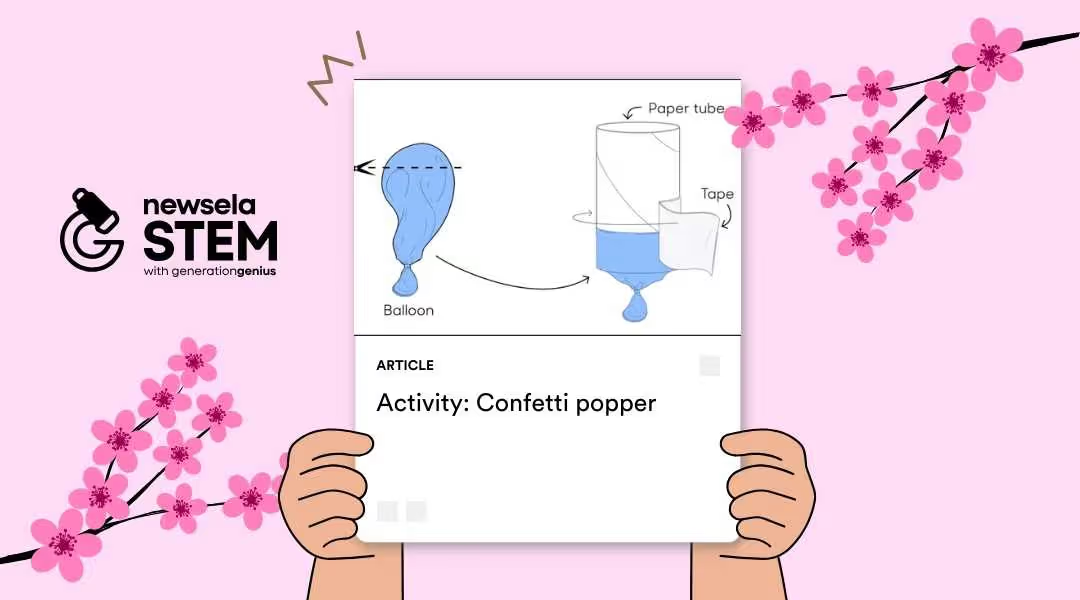
Chaharshanbe Suri, the last night of the old year, features loud noises to welcome the new season. Building a confetti popper lets students model how energy transfers through motion. With this activity, students can:
Teaching about spring holidays gives you a chance to build cultural understanding while reinforcing core literacy, social studies, and STEM skills. Nowruz cultural traditions help you bridge these subjects and show students how seasons, beliefs, and traditions connect across the world.
With Newsela’s subject-specific products, you can support learning using trusted articles, primary sources, literature, and interactive activities that meet students where they are, without adding extra prep time to your plate.
Not a Newsela customer yet? Sign up for Newsela Lite for free and start your 45-day trial. You’ll get access to our premium content and activities for everything you need to teach about Nowruz and other spring holidays with clarity and confidence.

.avif)
Help students ring in the new year and ease back after the break with these New Year activities for the classroom.

Discover ELA, social studies, and science activities you can do with your students to learn about and celebrate Lunar New Year.
.avif)
Use these Rosh Hashanah activities to teach students about the Jewish New Year through ELA and social studies lessons.


.jpg)
.jpg)