
Products

 Products Overview
Newsela products are purpose-built to unlock student motivation, inspire teachers, and drive long-lasting learning outcomes.








Resources
About
Products OverviewNewsela products are purpose-built to unlock student motivation, inspire teachers, and drive long-lasting learning outcomes.

World Water Day is a great time to pause and talk about why water matters. These World Water Day activities for school help you connect water science, global issues, and real life in ways your students understand.
You can use these activities across subjects, as full lessons or quick add-ons to science, ELA, and social studies. With these pre-made options, you can have a meaningful lesson without the extra prep.
Jump to:
Key takeaways:
World Water Day fits naturally into science classes. You can use it to reinforce core ideas students already study, like systems, cycles, data, and cause and effect. These activities work as full lessons or quick plus when you want learning to feel timely and meaningful.
Start by framing water as a shared resource that scientists study using evidence and testing. This approach keeps the focus on Earth science concepts students already learn, while grounding the lesson in real-world examples.
To get students thinking like scientists from the start, try activities that focus on observation, investigation, and problem solving:
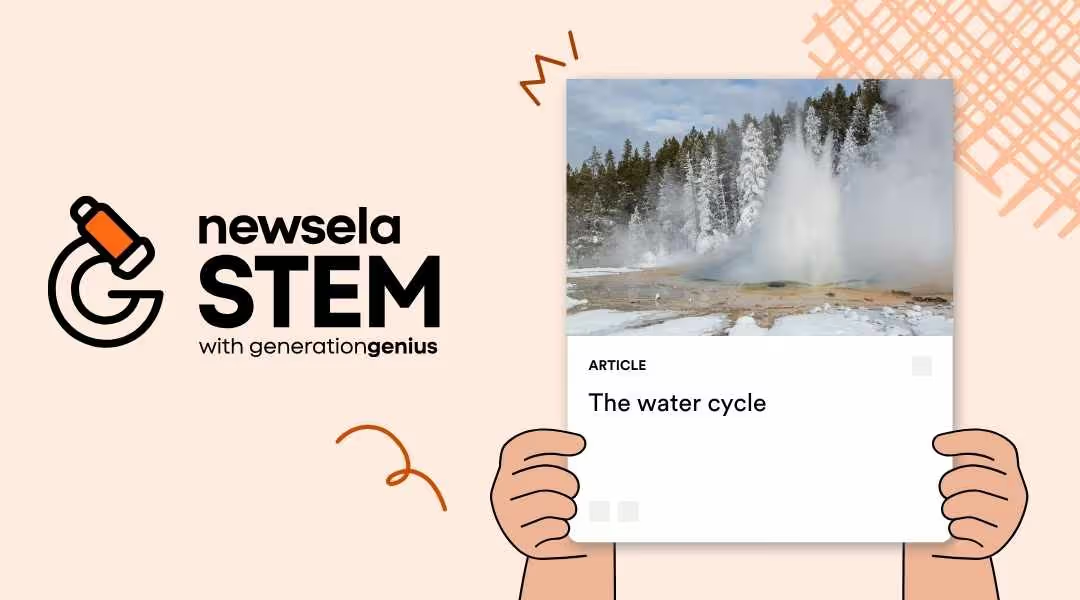
Students often learn the water cycle as a diagram, but World Water Day is a good chance to show how it actually works as a system. This keeps the focus on Earth science basics while helping students understand why water doesn’t disappear or magically reset.
To build that understanding, use resources that show how water moves, changes form, and stays part of a continuous process:
Working with data helps students practice the same thinking scientists use. This is a good place to reinforce skills like reading charts, spotting patterns, and explaining cause and effect using evidence.
To get students thinking analytically, use data-focused resources that ask them to interpret information rather than memorize facts:
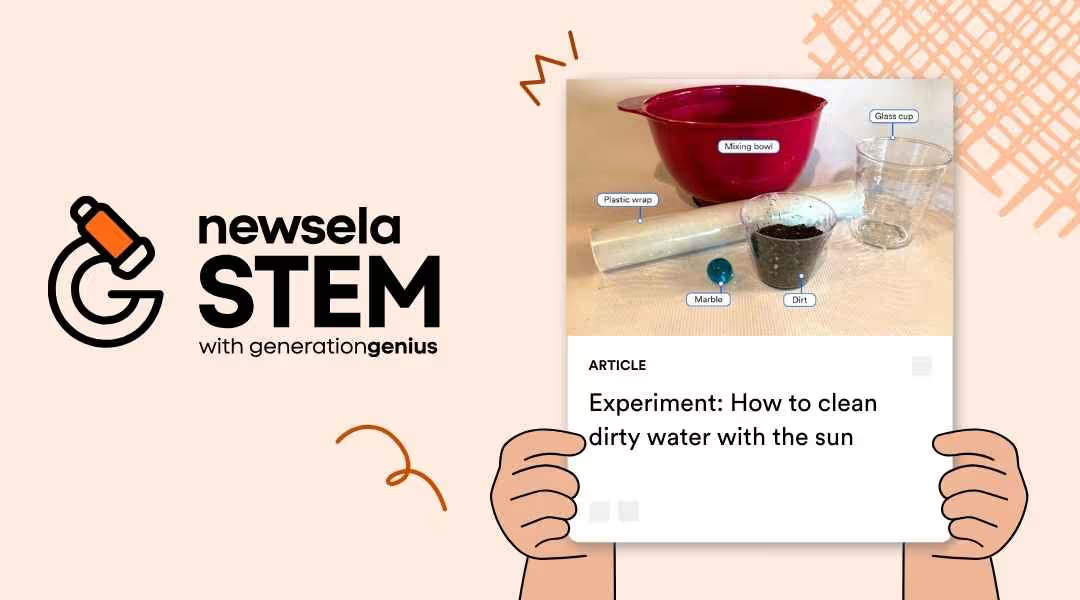
Seeing evaporation happen helps students connect abstract ideas to real observations. To make evaporation visible and concrete, guide students through a simple investigation that mirrors how scientists test ideas:
Students often learn about water sources in isolation. This is a chance to show how water systems work together to move, clean, and store water that people and animals rely on every day.
To build that systems-level understanding, use resources that explain how water moves through natural and human-managed processes:
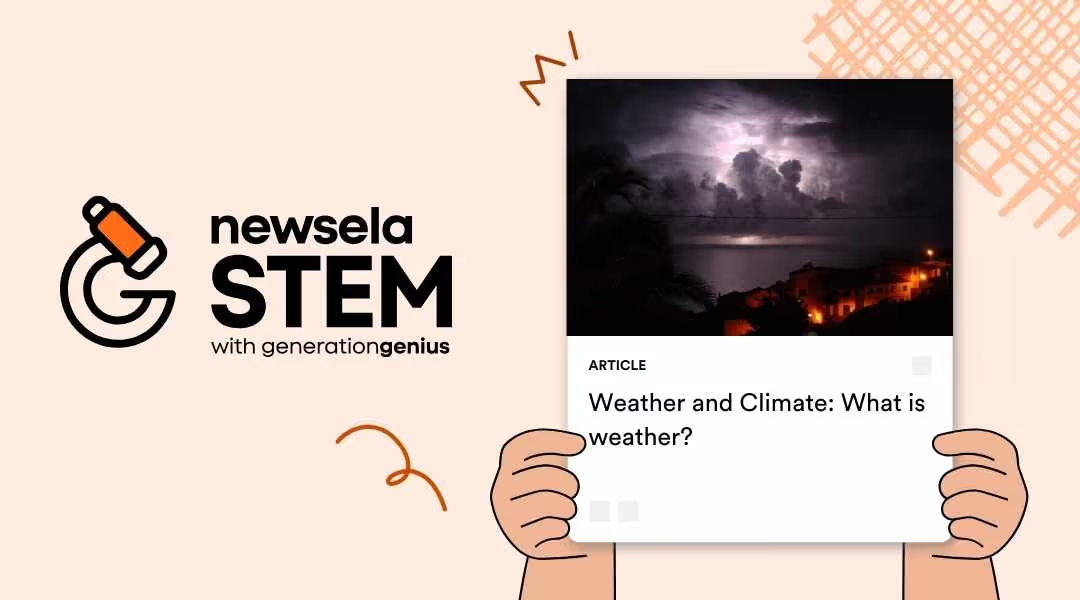
Weather makes more sense when students see how closely it ties to water science. This is a great time to reinforce familiar concepts while helping students connect everyday weather events to larger systems.
To help students make those connections, use resources that show how water influences weather patterns and conditions:
Virtual field trips help students connect water science to living systems they don’t see every day. These experiences make concepts like habitats and ecosystems easier to understand by showing them in real settings.
To bring those connections into your classroom, use virtual visits that highlight how animals depend on healthy water systems.
Videos help students visualize processes that are hard to see in real time. They also work well when you need a strong hook, a quick refresher, or a shared experience to launch discussion.
Using Newsela STEM with Generation Genius videos lets you reinforce science standards while keeping lessons accessible and engaging. Try these video selections:
K-2 Science:
3-5 Science
6-8 Science
Key takeaways:
World Water Day works well as a hook in ELA because water appears in everything from informational texts to arguments and poetry. These reading activities help you stay anchored in literacy skills while giving students meaningful content to read, discuss, and write about.

Access to clean drinking water looks different around the world. This topic gives students a strong context for reading informational text. It also supports skills like identifying main ideas, explaining processes, and connecting details across sources.
To help students understand how people solve water access challenges, use content that focuses on innovation and problem-solving:
Limited freshwater affects communities in different ways, and this topic gives students a clear reason to read closely and ask questions. It supports skills like identifying causes and effects and comparing how people respond to challenges.
To build understanding through reading, use texts that explain water shortages and how people adapt:

Water conservation gives students a strong topic for opinion-based reading and discussion. It works well for practicing skills like citing evidence, comparing perspectives, and forming claims from multiple texts.
To support that work, use readings that focus on awareness, real examples, and decision-making around water use:
Water pollution is a concrete topic that helps students practice close reading and vocabulary. It also gives them practice explaining how actions can affect water quality over time.
To help students build understanding through text, use readings that explain sources and effects on pollution:

Poetry gives students a different way to think about water through imagery, tone, and word choice. It works well for close reading, discussion, and short written responses without adding heavy background knowledge.
To explore how writers describe water and its meaning, use poems that connect nature, place, and experience. Try selections like:
Key takeaways:
Social studies is a natural fit for World Water Day because water shapes where people live, how societies develop, and how resources are managed. These activities help students build background knowledge while practicing core social studies skills.
Access to clean water and sanitation varies by location. This topic helps students compare regions, examine constraints, and understand how geography and resources influence daily life.
To build that understanding, use examples that show how water access varies around the world:

Oceans play a major role in shaping climate, trade, and ecosystems, which makes them a strong focus for social studies World Water Day lessons. This topic helps students connect geography and natural resources to human activity and global systems.
To build that understanding, use resources that explain how oceans function and why they matter worldwide:
World Water Day is a simple way to connect science, ELA, and social studies around a topic students already experience every day. With the right resources, you can build background knowledge, reinforce core skills, and keep lessons grounded in real-world examples without adding extra prep to your plate.
Newsela gives you access to ready-to-use texts, videos, and activities that work across grade levels and subjects. You can differentiate easily, support close reading and discussion, and keep learning focused on the standards you already teach.
If you’re not using Newsela yet, you can try it with our 45-day free trial. It’s an easy way to explore World Water Day activities for school and see how Newsela fits into your daily planning.


Find Earth Day lesson plans you can use in science, ELA, and social studies classrooms. Includes activities, debates, and projects for every grade band.

Find World Forest Day activities you can use in science, ELA, and social studies to build background knowledge about forests and trees.

Explore World Wildlife Day lessons for K–12 biology, animal science, and ELA using engaging Newsela STEM articles, videos, and activities.


.jpg)
.jpg)