
Products

 Products Overview
Newsela products are purpose-built to unlock student motivation, inspire teachers, and drive long-lasting learning outcomes.








Resources
About
Products OverviewNewsela products are purpose-built to unlock student motivation, inspire teachers, and drive long-lasting learning outcomes.

April is the perfect time to bring real-world money lessons into your classroom. Financial Literacy Month activities give you an easy way to connect reading, math, and social studies to skills your students will actually use.
You don’t need a full personal finance course to make it meaningful. With the right articles, videos, and discussion prompts, you can build smart, practical money habits across grade levels without adding extra prep.
Jump to:
Key takeaways:
Money shows up everywhere in the text your students read. Business stories. Sports contracts. Technology partnerships. Even debates about digital currency. April gives you a clear reason to lean into those topics.
You don’t need to turn your ELA block into a finance class. You just need strong texts, good questions, and reliable Financial Literacy Month activities you can plug and play into your lessons.
Start simple. Many students use money every day but don’t actually understand how it works. Terms like investment, currency, and budget get thrown around, but they need context.
You can use informational texts to build that foundation while still teaching the main idea, author’s purpose, and the argument structure. To build that understanding, use resources that introduce core finance concepts clearly and in a student-friendly way.
Cover topics like:

Most of your students already connect money with growing up. From allowance to babysitting and seeing adults in their lives working every day, they understand that they’ll have to earn money someday, but might not see the full picture.
Financial Literacy Month activities give you a way to explore all sides of earning money: The excitement, pressure, and responsibility. To build that understanding, use resources that show the real ups and downs of earning money, like:
Key takeaway:
Social studies is where money really comes to life. Economics, government policy, taxation, and markets are all connected. You might teach these topics year-round, but April gives you a clear chance to add them to your lesson plans.
You’re not teaching financial literacy in isolation. Instead, you’re helping students see how money shapes decisions, communities, and opportunity.
With its charts and graphs, economics may feel abstract. But once students connect the ideas to their own money decisions, it clicks.
Financial literacy activities help students see that personal finance doesn’t exist outside the economy; it functions within it. Start by helping students understand the bigger system. When they see how markets, supply and demand, and government policy shape money, personal finance makes more sense.
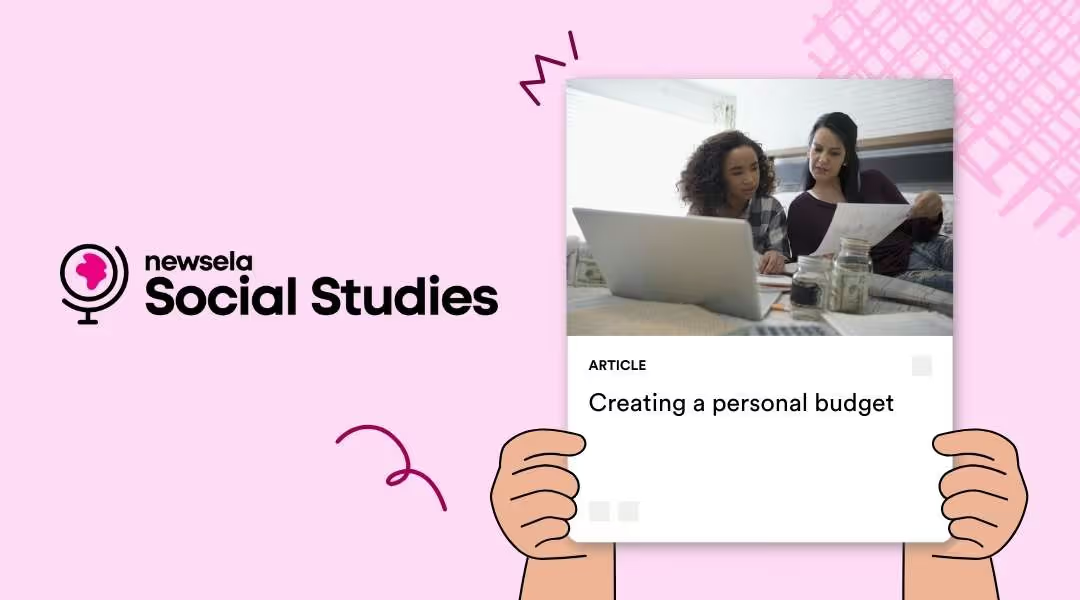
Once students understand the system, shift to daily money decisions. This is where it gets personal. Short-term financial literacy involves habits such as spending, budgeting, credit, and insurance.
To make those habits concrete, use resources that focus on everyday financial choices, like:
Students also need to see how today’s choices affect tomorrow’s options. The college decisions, career paths, major purchases, and investing are all influenced by the short-term money decisions they make today.
To help students think long-term, use resources that explore future-focused financial decisions and cover topics like:
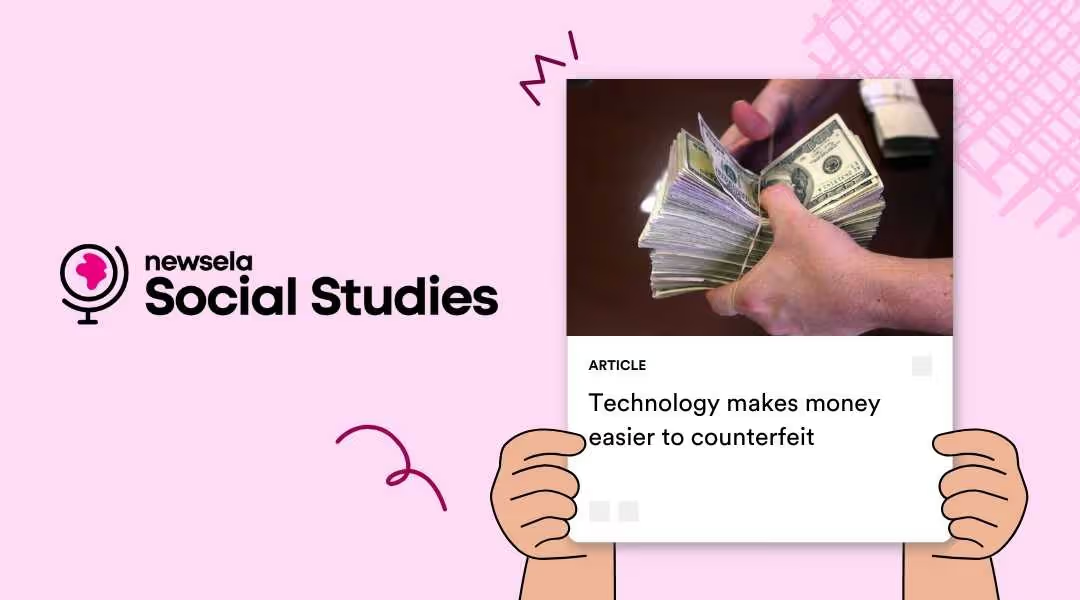
Students don’t automatically connect finance to their own lives. Things like taxes may feel like “adult problems,” even to high schoolers. But Financial Literacy Month activities work best when students see themselves in these scenarios.
Tracking money is about awareness. Who charges taxes? What’s the benefit of using physical money over credit cards or apps? These are real-world questions that students may encounter if they have jobs or shop in the modern world.
To help students think through these and other financial situations, use resources that explore:
Money makes headlines every day. When students see finance in the news, it no longer feels like just a textbook topic. Financial Literacy Month activities get stronger when you tie them to what’s happening right now.
To bring financial literacy into current events, use resources that highlight real financial stories, like:

If your school already uses the Next Gen Personal Finance curriculum, April is the perfect time to reinforce those lessons. You don’t have to start from scratch.
Financial Literacy Month activities work best when they deepen what you’re already teaching. You can use Newsela Social Studies to add background knowledge, real-world examples, and fresh discussion prompts to your existing units, like:
Key takeaways:
It’s somewhat easy to memorize math formulas. But financial literacy requires application. Students need to be able to calculate, compare, and reason with numbers.
Using Newsela STEM with Generation Genius math videos helps you reinforce math standards while breaking down challenging concepts into clear, engaging explanations. Videos provide visual models that support conceptual understanding and make abstract ideas easier for students to grasp.
Each video lesson also includes a 5E lesson plan, key vocabulary, and discussion questions to minimize the prep you need to do to bring these concepts to life for your students.
Try these video selections to tailor your instruction by grade band and reinforce key math skills for financial literacy learning:
K-2 Math:
3-5 Math:
6-8 Math:
Key takeaways:
No student is too young (or too old!) to talk about money. They already see it, spend it, ask for it, and wonder about it. The key is adjusting the conversation. What works in second grade won’t land the same way in eleventh.
With Newsela’s SEL Collection, an add-on to our subject products, you can design age-appropriate Financial Literacy Month activities that help students think about responsibility, planning, and long-term impact.
Elementary students need to learn the basics, like where money comes from, how we use it, and why saving matters. You’re not teaching heavy topics yet, just building habits and vocabulary.
To introduce financial literacy in ways that feel age-appropriate, use resources that explore:

Middle schoolers understand more about money than we think. They hear adults talk about the economy, see online ads, and some even manage small amounts of their own money.
Financial Literacy Month activities at this level should encourage students to think critically about money by debating, planning, and questioning their choices. To challenge middle schoolers, use resources that explore:
High school students feel money pressure in real ways. They’re closer to financial independence than they realize.
Financial Literacy Month activities at this level should feel practical. You’re helping students build confidence before they step into adult responsibilities. To prepare high school students for real financial conversations, use resources that explore:
Financial Literacy Month activities aren’t just for April. You can use them all year to give students tools they’ll use for life.
With Newsela’s daily instruction and assessment products, you can bring current, standards-aligned content into your classroom without adding hours of prep. You’ll find resources that make money topics accessible and engaging for any lesson or grade band.
Not a Newsela customer yet? Sign up for an account to start your free 45-day trial and try our premium differentiated content, engaging formative assessments, and real-time data.


.jpg)
.jpg)