
Products

 Products Overview
Newsela products are purpose-built to unlock student motivation, inspire teachers, and drive long-lasting learning outcomes.








Resources
About
Products OverviewNewsela products are purpose-built to unlock student motivation, inspire teachers, and drive long-lasting learning outcomes.

April 1 is coming, and that means your students will be thinking about pranks—whether you want them to or not. But you can use that energy to your advantage.
These April Fools' Day activities help you keep control of the day while tapping into students’ excitement. Turn potential pranks into teachable moments while building real skills in ELA, social studies, and science.
Jump to:
Key takeaways:
April Fools' Day is more than classroom chaos. It actually gives you an easy way to teach culture, tradition, and media literacy.
Instead of shutting down the silliness, you can redirect it. Let students explore where the holiday came from and how people celebrate it today. That curiosity does the heavy lifting.
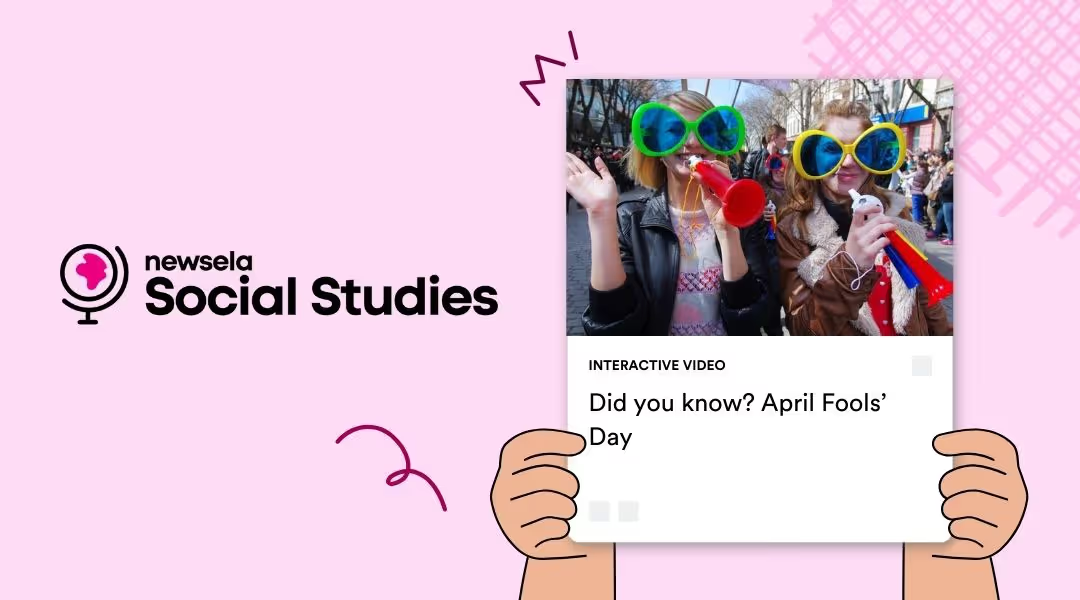
No one knows the exact origin of April Fools’ Day. That mystery alone hooks students into wanting to learn more. Some historians trace it back to 16th-century France. Others point to older spring traditions.
You can use this uncertainty to model historical thinking. Students weigh theories, compare sources, and decide what feels most credible. To build understanding, use resources that explore the holiday’s roots and how pranks show up in real life:
It’s not just your students pulling pranks on April Fools’ Day. Big brands join in, too. Some roll out fake products while others drop joke announcements that feel real.
This real-world angle on the holiday lets students analyze intent, audience, and impact. Were these pranks harmless fun or a marketing move? Did they work?
To show how April Fools’ Day plays out beyond the classroom, use resources like:
You can even adapt this lesson for younger students with our April Fools’ Day Elementary Spotlight text set. This text set keeps the focus age-appropriate and skill-level-appropriate while building background knowledge.
Key takeaways:
April Fools’ Day is basically a master class in plot twists. Someone sets up a story, someone else believes it, and then comes the big reveal.
That makes this holiday a great bridge into narrative structure, theme, and the author’s craft. You’re don’t have to force engagement because it’s already there.
Students love a surprise ending. The key is helping them see how authors build toward it instead of just dropping it in.
Start with a strong example, then break it apart. What clues did the author plant? What assumptions did the reader make?
To help students analyze and then create their own twists, use resources like:
This activity combines reading, writing, and discussion in one lesson. And, yes, your students will actually care about the ending!
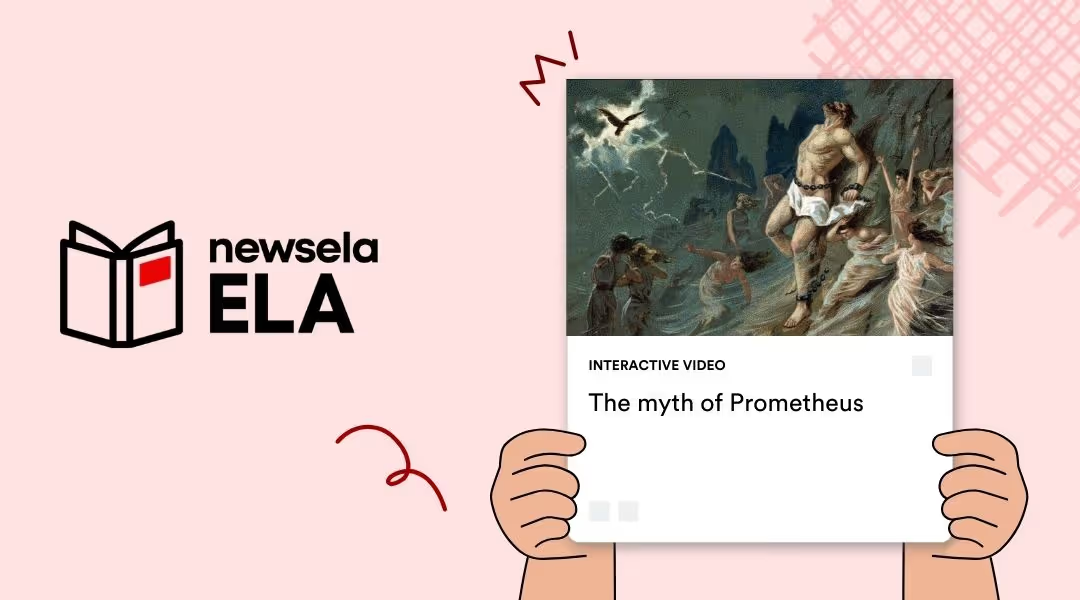
Every culture has a trickster. Prometheus is one your students will remember. He outsmarts the gods, steals fire, and pays for it.
That tension makes the story stick. It also gives you a chance to talk about themes, consequences, and the author’s purpose.
Instead of just summarizing the myth, push students to analyze how the story gets told and what message it sends. To guide that work, use resources like:
Key takeaways:
If you’ve ever done a simple experiment and heard, “Wait… what?!” then you know the power of student surprise.
April Fools’ Day activities in STEM don’t have to involve tricks. They just need a little wow factor. Let students think it’s magic for a second, then break down the science behind it.
You don’t need an elaborate setup to teach magic science. The key is making students predict, observe, and explain what’s happening. Start with an illusion, then pull back the curtain.
To bring that magic-to-science moment into your classroom, try experiments like:
With the right April Fools’ Day activities, you can lean into the fun and still hit your standards.
Whether you’re exploring history, teaching plot twists, or running magic-style STEM experiments, you’re building real skills. Students stay engaged, and you stay in control.
Even on April Fools’ Day, you want strong instruction. Newsela gives you read-to-teach content across subjects, including Newsela ELA, Newsela Social Studies, and Newsela STEM. You get articles, primary sources, literature, videos, and activities all in one place.
Not a Newsela customer yet? Create a free account and start your 45-day trial. You’ll unlock premium content and classroom-ready April Fools Day activities you can use right away.


Find engaging school-centered ELA activities to help students of all grade levels acknowledge and celebrate the 100th day of school.
Discover ELA activities for Friday the 13th to better understand why some people are superstitious about this particular unofficial holiday.

Use these Star Wars Day activities to teach science, ELA, and more while keeping students engaged with a topic they already love.


.jpg)
.jpg)