
Products

 Products Overview
Newsela products are purpose-built to unlock student motivation, inspire teachers, and drive long-lasting learning outcomes.









Resources
About
Products OverviewNewsela products are purpose-built to unlock student motivation, inspire teachers, and drive long-lasting learning outcomes.
Everything you need to be successfully while using the Newsela suite of products.
Newsela launched in 2013 with a bold mission: Meaningful classroom learning for every student. Today, our team constantly strives to deliver powerful solutions that inspire our users.

Veterans Day comes every November 11, marking the anniversary of the end of World War I fighting in 1918. In class, the holiday can open up conversations about what military service has looked like across U.S. history and how veterans describe their experiences.
These Veterans Day lesson plans can help you build that context in social studies and ELA, and make sure you treat military service and veteran experiences with the diverse care they need.
Build the historical context around Veterans Day by connecting the holiday to the people and conflicts behind it. These social studies lessons let students examine military service across different eras and explore how service members experienced war, recognition, and remembrance.
For younger students, start with concrete examples of what a veteran is and how people show respect for those who served. Images, a read-aloud, and a simple thank-you activity give K–2 students several age-appropriate ways to connect the meaning of Veterans Day to people they may know in their families or communities.
Use images, a read-aloud, and a thank-you card activity to introduce younger students to veterans and why Americans recognize Veterans Day.
Show the images one at a time. Ask students what they notice, what they think is happening, and who they think the people are. Point out uniforms and flags, then explain that veterans are people who have served in the military.
Read “Thank You, Veterans” aloud. Pause to discuss the jobs veterans had, how they helped the country, how people in the text show their thanks, and why thanking veterans matters.
Have students make a thank-you card for a veteran. They can draw a picture on the front and write or dictate a message inside.
Thank you for ____
Display the cards in a classroom gallery or share them with veterans in students’ families or community.
Veterans Day falls on November 11 because World War I fighting ended at the 11th hour of the 11th day of the 11th month in 1918. The first Armistice Day followed on November 11, 1919, and the holiday later expanded to honor U.S. veterans of all wars.
Unlike Memorial Day, which honors military members who died in service, Veterans Day recognizes everyone who served. Because students may have family members or friends in the armed forces, consider your class's needs when discussing the holiday and veterans’ experiences.
Newsela Social Studies resources
Choose two or three resources based on the part of Veterans Day you want students to explore: the holiday’s history and remembrance, experiences during military service, or veterans’ lives after service.
| Resource | Level / Runtime | Spanish? |
|---|---|---|
| Why did Veterans Day start? Explainer | 360L–1620L | ✓ Yes |
| On Veterans Day, a connection to World War I Article | 410L–1000L | |
| Female vets keep fighting to be written into history Article | 550L–1230L | ✓ Yes |
| Native American veterans will be honored with memorial on National Mall Article | 540L–1230L | ✓ Yes |
| The 1932 Bonus Army Explainer | 560L–1070L | ✓ Yes |
| Painter takes WWII vets back in time with traveling portrait exhibit Article | 680L–1090L | |
| Architect and artist Maya Lin designed the Vietnam Veterans Memorial Biography | 560L–1280L | ✓ Yes |
| Student connects with veterans, shares their stories on Instagram Article | 580L–1040L | |
| What they left behind Explainer | 410L–1010L | |
| Vietnam Veterans Memorial Video | 2:35 |
Scroll left to right to see the full table.
| Resource | Level / Runtime | Spanish? |
|---|---|---|
| “Before the Battle”: A poem by Siegfried Sassoon Poem | ||
| Comics captured America’s growing ambivalence about the Vietnam War Article | 590L–1300L | ✓ Yes |
| The Return of Sal Caputo Fiction | 800L–820L | ✓ Yes |
| D-Day at 75: Veteran, 95, to parachute into Normandy Article | 510L–1070L | |
| “Dulce et Decorum est”: A poem by Wilfred Owen Poem | 890L | |
| “The First Saddest Day of My Life”: A Vietnam War Story Memoir | 570L–1210L | ✓ Yes |
| Chester Nez, last of WWII’s Navajo code talkers, dies at 93 Obituary | 670L–1080L | ✓ Yes |
Scroll left to right to see the full table.
| Resource | Level / Runtime | Spanish? |
|---|---|---|
| WWII veteran goes viral as he plays national anthem on harmonica Article | 560L–1210L | |
| A 99-year-old veteran walks his garden to raise money to fight pandemic Article | 610L–1270L | |
| Paralyzed veteran with numbness in fingers still learned to play guitar Article | 400L–1040L | |
| Dogs trained in prison change veterans’ lives Article | 560L–1250L | |
| Hero Dogs program enlists pups to help those who served Article | 380L–1010L | ✓ Yes |
| Meet Richard Overton, the oldest living U.S. veteran Biography | 550L–1220L |
Scroll left to right to see the full table.
Trench warfare shaped soldiers’ daily experiences during World War I. This lesson asks students to examine a trench image, read a primary-source letter, and review background information about the war. Then they’ll use evidence from the resources to consider how this style of fighting affected soldiers in battle and after they retired from service.
Help students use images, primary sources, and informational text to examine what trench warfare was like and how it affected soldiers.
Have students use the Image Analysis worksheet to examine an image of soldiers in a World War I trench. In pairs, ask them to share what they notice and predict what “trench warfare” means before discussing their ideas as a class.
Assign “Primary Sources: A Letter from the British Trenches During World War I” and “Everything You Need to Know About World War I.”
As students read, have them highlight details showing what trench warfare was like and use the Annotation Tool to record positive and negative effects of this style of fighting.
Have students complete the Primary Source Analysis graphic organizer for the British trenches letter, focusing on the effects of trench warfare on soldiers and on the war overall.
Use the lesson’s exit ticket to have students explain how trench warfare affected soldiers and support their reasoning with evidence from the reading.
How did trench warfare affect soldiers? Be sure to use details from the article to support your reasoning.
Use the Think-Pair-Share organizer with the following description of trench warfare from F. Noakes:
“I shall not easily forget those long winter nights in the front line. Darkness fell about four in the afternoon and dawn was not until eight next morning. These sixteen hours of blackness were broken by gun flashes, the gleam of star shells and punctuated by the scream of a shell or the sudden heart-stopping rattle of a machine gun. The long hours crept by with leaden feet and sometimes it seemed as if time itself was dead.”—F. Noakes, “The Distant Drum”
Read “The Harlem Hellfighters of World War I.” How were the experiences of the Harlem Hellfighters different than the soldiers you read about in the lesson?
Students can examine why the United States became involved in Vietnam, how Cold War concerns shaped that involvement, and how U.S. policy changed over the course of the war. This lesson uses a KWL routine, paired readings, and an extension activity to help students evaluate those decisions.
Use paired readings, annotation, and reflection to help students examine America’s goals and decisions during the Vietnam War.
Have students use the KWL Chart to complete the “Know” and “Wonder” sections about the causes and outcomes of the Vietnam War or America’s role in the conflict.
Assign both articles from the lesson. As students read, have them use one color to highlight causes of the Vietnam War and a second color to highlight details about America’s role in the war.
Have students return to their KWL Chart and complete the “Learned” section by summarizing what they learned about America’s involvement in Vietnam.
Use the Vietnam War formative assessment on Formative to check students’ understanding of U.S. involvement in the conflict.
Did your view of America’s role during the Cold War change after learning more about the Vietnam War? Why or why not?
For an extension, ask pairs to imagine they are advisers to President Lyndon Johnson. Students should prepare a report recommending whether he should support the war and explain why or why not. Reports can take the form of written memos, slideshow presentations, or class presentations.
Watch the Vietnam Veterans Memorial video, then discuss:
Have students record or review these terms using the Key Terms Chart.
Students can examine the reasons behind U.S. intervention in Iraq and Afghanistan and the effects of those wars on people in multiple countries. The lesson uses vocabulary, paired readings, and cause-and-effect analysis to help students evaluate the government and military decisions.
Help students examine why the United States invaded Iraq and Afghanistan, consider the effects of the wars, and evaluate whether U.S. intervention was justified.
Ask students to silently write their own definition or examples of terrorism. Then use the FBI definitions of international and domestic terrorism to compare their ideas with the agency’s definitions.
What is the definition of terrorism?
Have students read “The History of the War on Terror” and select one additional article from the lesson’s instructional set.
As they read, have students use one color to highlight key information about the U.S. invasions of Iraq and Afghanistan and a second color to highlight effects of the wars on people in all countries.
In pairs, have students complete the Cause and Effect Chart. They should identify factors or events that led to U.S. intervention in Iraq and Afghanistan, then record effects of the intervention and invasions.
Ask students to craft three or four interview questions they would ask President George W. Bush or President Barack Obama about the invasions of Iraq and Afghanistan. For each question, students should explain the reasoning or information that led them to ask it.
Do you think the “War on Terror” should be considered a success or a failure? Why?
Have students record or review the terms using the Key Terms Chart.
Indigenous Americans have contributed to U.S. war efforts since the Revolutionary War, but this lesson asks students to examine whether the government’s treatment of Indigenous veterans has matched that service. Students compare military contributions wth recognition and support veterans received afterward.
Help students compare Indigenous Americans’ military service with the recognition and treatment Indigenous veterans received from the United States government.
Ask students to brainstorm ways the United States honors soldiers and veterans, such as memorials, holidays, and parades.
What do you think is the best way to thank veterans for their sacrifices?
Assign students to read “Native American veterans to join groups honored at National Mall” and “Navajo code talkers need new homes.”
Have students use one color to highlight details about Indigenous Americans’ military service and a second color to highlight details about U.S. treatment of Indigenous veterans. Students should use the Annotation Tool to note their evaluation of that treatment.
Have students use the Paired Text Analysis graphic organizer to organize evidence from both articles and answer the question, “How has the U.S. government treated Indigenous veterans?”
Allow students to compare notes in small groups and discuss whether the treatment described in the readings matches the ideas they generated during the opening brainstorm.
Ask students to prepare a short presentation answering the essential question. They should begin by assigning the government an overall grade from A to E, then use details from the articles to justify that grade.
Students may work individually or in small groups and can present live or post their presentations to an online platform.
If you were in a position of power, what changes would you make to the treatment of Indigenous veterans?
Have students read “Congresswoman Deb Haaland and her historic election victory” as an example of how representative government might affect the treatment of Indigenous Americans over time. Students can incorporate details from the article into their presentations.
Have students record or review these terms using the Key Terms Chart.
Students can compare how people across diverse groups served and contributed to World War II, and whether those contributions were recognized at the time. The lesson asks them to identify shared experiences while also examining what made each group’s service distinct.
Help students compare the contributions, experiences, and recognition of diverse groups who served during World War II.
Use the Web Chart to create a class chart with “American Soldiers” in the center. Preview the headlines in the instructional set and ask students which groups of Americans are represented.
How do you think World War II called on all people to make sacrifices?
Have students select two articles to read and complete the video assigned in the lesson.
As they read, students should use one color to highlight the contributions of each person or group and a second color to highlight how that person or group was or was not recognized for their sacrifices at the time. As they watch, students should take notes on the group’s contributions to World War II.
Give students time to organize their notes using the Notice, Wonder, Connect worksheet. In small groups, have them discuss their observations, questions, and connections across different resources while continuing to add to their notes.
Something American soldiers in World War II had in common was…
Something that made American soldiers unique was…
Have students design an infographic celebrating the contributions of one group of American soldiers they studied. Their infographic should include a clear title, the talents and skills the group brought to the war, and experiences at war and at home.
Students may create the infographic by hand or with an online platform. Finish with a gallery walk so students can view and comment on the different experiences represented.
What are three questions you wish you could ask an American soldier?
Have students record or review these terms using the Key Terms Chart.
Newsela Social Studies resources
The source includes six readings and two videos featuring different people and groups who contributed to World War II.
| Resource | Level / Runtime | Spanish? |
|---|---|---|
| Primary Sources: African American reactions to World War II Interview | 550L–1130L | ✓ Yes |
| Latinos in World War II: Fighting on Two Fronts Explainer | 590L–1360L | ✓ Yes |
| Cornelia Fort, a pilot during World War II Biography | 610L–1290L | |
| Pariotism Crosses the Color Line: African Americans in World War II Explainer | 580L–1410L | ✓ Yes |
| The Navajo code talkers played crucial role during World War II Article | 390L–1040L | ✓ Yes |
| Fierce, feared and female: The World War II pilots known as the ‘Night Witches’ Explainer | 540L–1130L | ✓ Yes |
Scroll left to right to see the full table.
| Resource | Level / Runtime | Spanish? |
|---|---|---|
| The 442nd: The most decorated regiment of the second World War Video | 2:25 | |
| Ghost army Video | 2:34 |
Scroll left to right to see the full table.
D-Day was important because the June 6, 1944, Allied invasion of Normandy began the liberation of occupied Western Europe from Nazi control. Students can trace what happened, examine the invasion’s outcome, and connect it to Germany’s surrender less than a year later.
Help students examine what happened on D-Day, its goal and outcome, and why the invasion became a turning point in the war in Europe.
Have students watch “D-Day Explained” from Imperial War Museums.
Assign “WWII Part Four: D-Day and the War’s End” and one additional article from the resource set.
As students read, have them use one color to highlight information about the events of D-Day and a second color to highlight information about its outcome and aftermath.
Have students use the Write-Pair-Share organizer to respond independently, compare their ideas with a classmate, and prepare to discuss their reasoning as a class.
Why was D-Day so important to the war?
Ask students to imagine they have the opportunity to interview a D-Day veteran. Have them create a list of five to eight questions they would want to ask. If time allows, students can conduct additional research into D-Day before finalizing their questions.
Newsela Social Studies resources
Use these readings to add historical context, firsthand perspectives, and later reflections on the people and events connected to D-Day.
| Resource | Reading Level | Spanish? |
|---|---|---|
| Primary Source: Franklin D. Roosevelt’s D-Day Prayer, 1944 Speech | 500L–1270L | ✓ Yes |
| WWII Part Four: D-Day and the War’s End Explainer | 570L–1340L | ✓ Yes |
Scroll left to right to see the full table.
| Resource | Reading Level | Spanish? |
|---|---|---|
| World honors D-Day’s fallen, 70 years on Article | 740L–1350L | ✓ Yes |
| D-Day at 75: Veteran, 95, to parachute into Normandy Article | 510L–1070L | |
| Mavis Batey, renowned British code breaker, dies at 92 Obituary | 660L–1280L |
Scroll left to right to see the full table.
ELA gives students another way to understand Veterans Day by exploring veterans’ lives and experiences through literature and informational texts. These resources help students examine military service, hardship, remembrance, and how veterans’ stories are shared and honored.
Students can use this Veterans Day text set to learn about the holiday's history, veterans’ personal experiences, veterans’ challenges, and stories of remembrance. The collection offers multiple perspectives on how veterans receive representation, support, and honor.
Newsela ELA resources
Browse the resources below or open the full Veterans Day Text Set.
Scroll left to right to see the full table.
| Resource | Reading Level | Spanish? |
|---|---|---|
| Architect and artist Maya Lin designed the Vietnam Veterans Memorial Biography | 560L–1280L | ✓ Yes |
| Meet Richard Overton, the oldest living U.S. veteran Biography | 550L–1220L | |
| “The First Saddest Day of My Life”: A Vietnam War Story Memoir | 570L–1210L | ✓ Yes |
| Chester Nez, last of WWII’s Navajo code talkers, dies at 93 Obituary | 670L–1080L | ✓ Yes |
Scroll left to right to see the full table.
Students can investigate the controversy surrounding the Vietnam Veterans Memorial design by comparing a video about the memorial with a biography of its designer, Maya Lin. This lesson asks students to consider what each medium reveals and leaves out when learning about a historical event.
Use this grades 6–8 lesson to explore the controversy surrounding the memorial’s design while comparing what students learn from video and print sources.
Open and display the image of a soldier visiting the Vietnam Veterans Memorial.
What does this image make you think or feel? What details about the image stand out to you most?
Have students watch the Vietnam Veterans Memorial video, noting the main ideas and striking images.
Ask students to briefly summarize the ideas from the video that stand out to them.
Read “Architect and artist Maya Lin designed the Vietnam Veterans Memorial.”
Have students highlight key details about Maya Lin’s life and work and annotate connections they make to the video.
Have students revisit both sources and use the Comparing Media organizer to evaluate what each medium contributes.
What context about Maya Lin and the Vietnam Veterans Memorial is present in the video that readers do not get to see in the article? What details can they grasp in the article that they may miss in the video?
Have students respond through discussion or writing using evidence from both sources.
Compare the article and video about the Vietnam Veterans Memorial. What are the benefits and drawbacks of each type of source when learning about a historical event?
Ask students to design a visual they would use to memorialize an important person or event from history. Have them explain the concept behind their design and the ideas they hope the visual will convey.
War can have psychological effects that continue after service and shape how veterans experience returning home. In this lesson, students examine those effects through reading, cause-and-effect analysis, and evidence-based writing.
Use this lesson to help students connect wartime experiences with some of the hardships veterans may face after returning home.
Use a Think-Pair-Share organizer to have students consider what it means to be a hero and what returning home after war might be like.
Have students preview the available texts and choose one they will read.
As they read, ask them to highlight in one color details that reveal what life was like during war and in another color details that show the effects of surviving a war.
Have students use the Cause and Effect Chart to identify psychological effects war can have on people.
Ask students to complete an Empathy Map showing how soldiers might feel as they return home after war. Students should use evidence from their reading to support their ideas.
Have students write a response using evidence from the text. Afterward, they can share their writing with a partner or with the class.
How does war impact people? Support your claim using at least two quotes from the text.
Consider showing students a relevant TED Talk and challenging them to complete a research task that extends their understanding of the psychological effects of war and veterans’ experiences.
Reading and viewing options
Browse the collection by theme to choose texts and media that support the focus of your lesson.
| Resource | Level / Runtime | Spanish? |
|---|---|---|
| Vietnam veterans Video | 2:11 | |
| The Vietnam War: Tragic Conflict in Asia Affected an American Generation Explainer | 530L–1490L | |
| “The First Saddest Day of my Life”: A Vietnam War Story Memoir | 570L–1210L | ✓ Yes |
| America and warfare were never the same after World War I Article | 590L–1090L | |
| The lost generation after World War I Explainer | 620L–1090L | ✓ Yes |
On smaller screens, scroll horizontally to view all columns.
| Resource | Level / Runtime | Spanish? |
|---|---|---|
| Obama awards Medal of Honor to veterans previously overlooked Article | 720L–1300L | |
| Monument in New York honors Black service members across U.S. wars, military branches Article | 620L–1400L |
On smaller screens, scroll horizontally to view all columns.
| Resource | Level / Runtime | Spanish? |
|---|---|---|
| Dogs trained in prison change veterans’ lives Article | 560L–1250L | |
| The American G.I. Forum Explainer | 660L–1190L |
On smaller screens, scroll horizontally to view all columns.
Students can compare the origins, meanings, and observances of three related but different holidays: Veterans Day, Memorial Day, and Independence Day. The lesson uses images, annotations, and a Triple Venn Diagram before students answer a shared focus question with evidence from all three texts.
Use this grades 3–8 lesson to help students compare the origins, meanings, and observances of Veterans Day, Memorial Day, and Independence Day.
Before class, choose one representative image for each holiday. Look for:
Display the three images together without identifying the holidays first, if appropriate for your students.
What do you notice? What is similar and different between the three images?
Have students read “The Declaration of Independence,” “The Origins of Memorial Day,” and “Why Did Veterans Day Start?”
Students should use one color to highlight the significance of each holiday and a second color to highlight how each holiday is celebrated or observed.
After reading, have students debrief their annotations with a partner. Then, use the Triple Venn Diagram to compare and contrast the three holidays.
Have students use evidence from all three sources to respond through discussion or writing.
How do Independence Day, Memorial Day, and Veterans Day compare and contrast?
Have students create a short story or poem that explains the similarities and differences among the three patriotic holidays.
Fiction and nonfiction can emphasize different aspects of war and military service. Students can compare how plot, setting, characters, text structure, and the author’s purpose shape each text’s message. Then they can use evidence from both sources to explain how genre affects what readers understand.
Pair a fictional account with an informational text to help students examine how genre and style shape the way writers portray war and its consequences.
Preview the topic or general idea of at least one text. Ask students to reflect on what they already know, what they would like to know, and what they predict they may read about.
Have students read both texts and use different annotation strategies for each genre.
After students read both texts, have them share their annotations and summaries with a partner.
Have students synthesize their thinking by completing a Venn Diagram or the Paired Text Analysis worksheet with a guiding question that applies to both texts.
Poetry, fiction, and narrative nonfiction can give students different perspectives on soldiers’ experiences during and after war. This collection includes poems, short fiction, and memoir for upper elementary through high school, giving you several genres to use when exploring military experiences through literature.
Literature about war
These poems and stories explore the experiences of soldiers during and after war.
| Resource | Grade Level | Spanish? |
|---|---|---|
| “Dulce et Decorum est” By Wilfred Owen Poem | 6–12 | |
| “Before the Battle” By Siegfried Sassoon Poem | 9–12 | |
| “Everyone Sang” By Siegfried Sassoon Poem | 4–8 | |
| “To The Colored Soldiers” By Irvin W. Underhill Poem | 4–12 |
On smaller screens, scroll horizontally to view all columns.
| Resource | Grade Level | Spanish? |
|---|---|---|
| “The Bowmen” By Arthur Machen Fiction | 9–12 | ✓ Yes |
| “The Return of Sal Caputo” By Timothy Tocher Fiction | 4–8 | ✓ Yes |
| “The First Saddest Day of my Life: A Vietnam War Story” By Dr. Sharon D. Raynor and Louis Raynor Memoir | 6–12 | ✓ Yes |
On smaller screens, scroll horizontally to view all columns.
Military-themed novels, memoirs, and biographies can help students examine service and veterans’ lives after war. These nine Novel and Book Studies span grades 3–12 and include both American military experiences and additional war perspectives that can deepen students’ understanding of service.
Military-themed books
Browse the Newsela ELA novel and book studies collection, then use the grade ranges and preview notes below to choose a title that fits your students.
| Book | Grade Range | Military or veteran focus | Teacher preview |
|---|---|---|---|
| Chester Nez and the Unbreakable Code: A Navajo Code Talker’s Story By Joseph Bruchac | 3–6 | Follows Navajo Code Talker Chester Nez from his experiences with forced assimilation to his World War II service with the U.S. Marines in the Pacific. | Provide context for Native American boarding schools, forced assimilation, discrimination, and World War II combat. |
| My Brother Sam Is Dead By James Lincoln Collier & Christopher Collier | 6–8 | Examines Revolutionary War service through a Continental Army soldier and the consequences his enlistment has for his family. | Preview wartime violence, imprisonment, death, and an execution by firing squad. |
On smaller screens, scroll horizontally to view all columns.
| Book | Grade Range | Military or veteran focus | Teacher preview |
|---|---|---|---|
| Unbroken: The Young Adult Adaptation By Laura Hillenbrand | 7–10 | Traces U.S. Army Air Forces bombardier Louis Zamperini through combat, survival at sea, captivity, trauma, and resilience during World War II. | Preview combat deaths, starvation, severe POW abuse, torture, and trauma. |
| The Red Badge of Courage By Stephen Crane | 8–12 | Explores fear, courage, shame, and uncertainty through an inexperienced Union soldier confronting Civil War combat. | Plan support for battlefield deaths and injuries as well as older language and dialect. |
On smaller screens, scroll horizontally to view all columns.
| Book | Grade Range | Military or veteran focus | Teacher preview |
|---|---|---|---|
| All Quiet on the Western Front By Erich Maria Remarque | 9–12 | Follows young German soldiers through World War I trench warfare, emphasizing loss, trauma, disillusionment, and alienation from civilian life. | Preview graphic injuries and deaths, corpses, trauma, profanity or crude language, drinking, and sexual material. |
| All the Light We Cannot See By Anthony Doerr | 9–12 | Uses a young German radio specialist’s military service to explore indoctrination, obedience, conscience, and the moral consequences of serving the Nazi regime. | Preview Nazi persecution and indoctrination, wartime violence, prisoner mistreatment, and references to sexual violence. |
| The Five People You Meet in Heaven By Mitch Albom | 9–12 | Shows how one American World War II veteran’s combat and captivity continue to shape his identity, relationships, guilt, and memories decades later. | Preview wartime violence, captivity, burns, death, traumatic memories, and the novel’s spiritual or afterlife framework. |
| A Farewell to Arms By Ernest Hemingway | 10–12 | Follows an American ambulance lieutenant in the Italian army through combat, injury, retreat, and growing disillusionment with romanticized ideas about war. | Preview battlefield violence, death, alcohol use, an adult sexual relationship, pregnancy, and maternal and infant death. |
| The Things They Carried By Tim O’Brien | 10–12 | Explores the physical and emotional burdens carried by American soldiers in Vietnam, including fear, friendship, memory, survivor guilt, and trauma. | Preview graphic combat deaths, profanity, sexual references, racial and ethnic slurs, substance use, and disturbing descriptions of bodies and trauma. |
On smaller screens, scroll horizontally to view all columns.
Veterans Day is one opportunity to help students explore military service, veterans’ experiences, remembrance, and the ways war can shape people and communities. You can return to many of these topics throughout the year for Memorial Day, Pearl Harbor Remembrance Day, and other lessons about U.S. history and military service.
With Newsela Learning Suite, you can bring differentiated articles, literature, videos, and instructional resources into those conversations across grade levels and subjects. If you’re not a Newsela customer, you can sign up for free, start your 45-day free trial of premium products, and explore more content for Veterans Day and beyond.

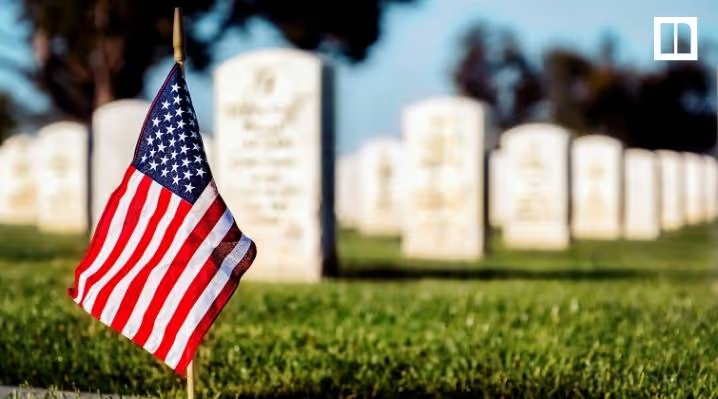
Use Memorial Day projects to teach meaning, history, and reflection with ready-to-use ELA and social studies activities for your classroom.

Find Fourth of July activities for ELA, social studies, and STEM that help students explore U.S. history, identity, and seasonal science.

Teach ELA and social studies students about the significance and impact of Pearl Harbor Day and why we still recognize it over 80 years after the attack.


.jpg)
.jpg)